

When people think of Japan, the word “materialistic” rarely comes to mind. However, when tourists visit here for the first time, they often find the reality quite different from their expectations.
Instead of the maiko, ninja and robots they anticipated, they are greeted by crowds of ordinary people decked out in expensive brand-name goods. Rather than streets lined with anime and video game shops, they see an endless array of European fashion house stores. If they dare to venture inside, the sticker shock often sends them right back onto the street. Some might even experience a Japanese version of Paris syndrome, a term coined to describe the mental break some Japanese tourists experienced in the 1970s when their romanticized vision of Paris clashed with reality. Most of us wouldn’t dream of browsing at haute couture shops like Hermès, Dior or Saint Laurent. Yet, luxury goods at surprisingly low prices are abundant throughout Japan.
If you’re after a Louis Vuitton bag, a Supreme hoodie or Gucci sunglasses, you’re likely to find a deal. Luxury at a bargain sounds suspicious, but Japan’s stringent anti-counterfeit laws mean you can rest assured that the products are genuine. However, there’s a catch: they’re second-hand.
Whether young or old, male or female, many Japanese people have a deep affection for luxury items. Japan is one of the largest markets for European and American luxury brands, a cultural phenomenon that dates back to post-war Japan.
Post-war dreams
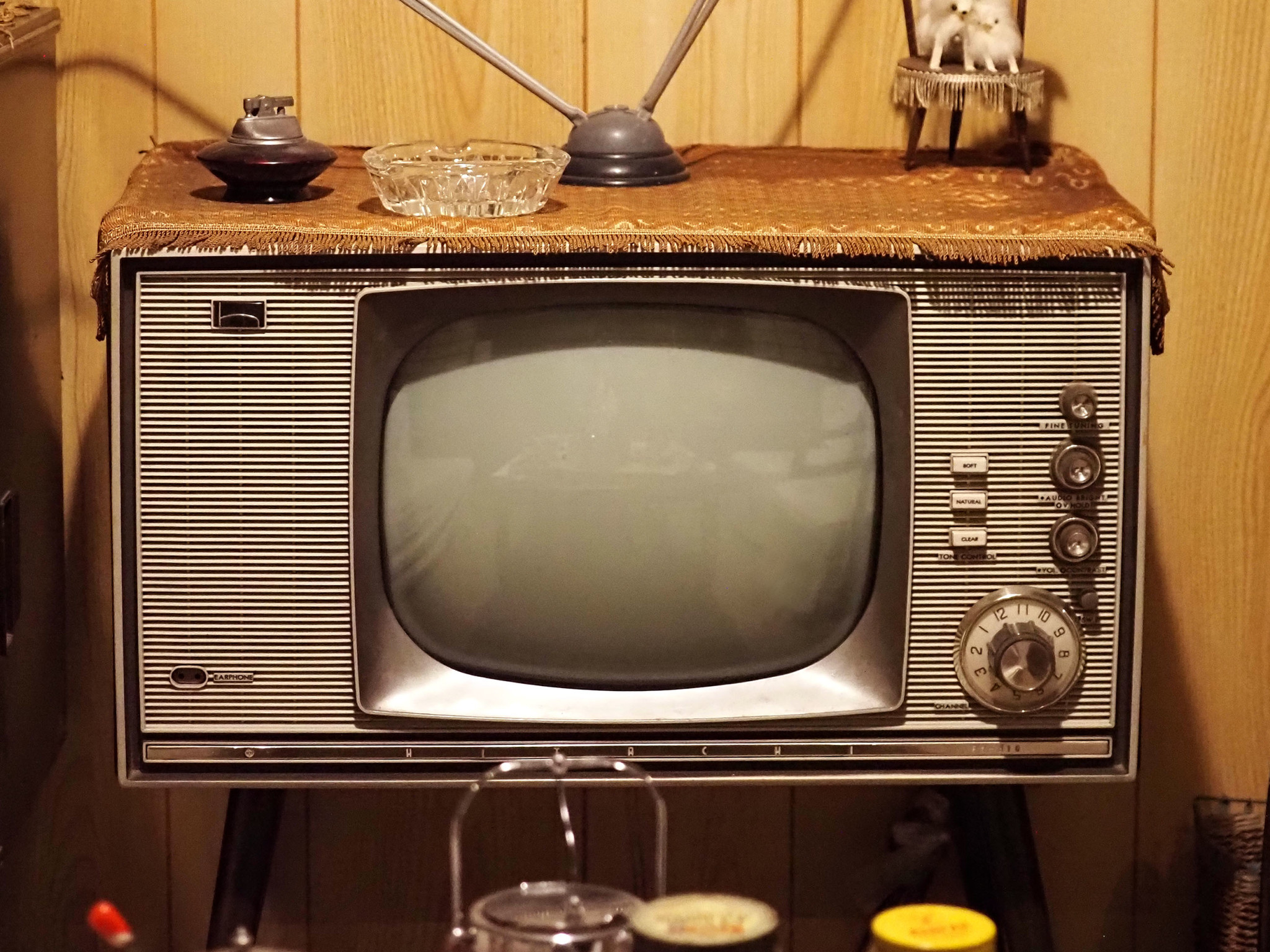
One of the “three sacred treasures” everyone in 1950s Japan coveted — a black-and-white TV. Image: James Rogers
In the 1950s, Japan was recovering rapidly after the devastation of World War II. Standards of living were improving, and everyone coveted what were referred to as the “sanshu no jingi” or “three sacred treasures.” Originally describing imperial regalia, the phrase was repurposed to signify the era’s most desired items: a black-and-white TV, a refrigerator and a washing machine.
As the economy surged, the 1960s brought a new trio of sacred treasures — the “three Cs”: a car, a color TV and an air conditioner. Many upgraded to color TVs during the excitement of the 1964 Tokyo Olympics.
By the 1980s, Japan’s booming economy saw it poised to overtake the U.S. as the world’s largest. Basic household items were no longer the pinnacle of desire; instead, luxury brands became the new status symbols for those with disposable income.
By the 1990s and 2000s, luxury items were ubiquitous among Japanese people. It wasn’t just the wealthy buying designer goods; even average individuals carried at least one luxury accessory. Today, it’s not uncommon to see an elderly person of seemingly modest means pull out a Louis Vuitton wallet at a cashier.
Nagoya’s stealth wealth

A model poses at a Louis Vuitton storefront in Nagoya. Image: James Rogers
Even after the economic bubble burst in 1989, certain industries have continued to thrive.
Toyota, headquartered in Nagoya, is a prime example, with its stock reaching an all-time high in 2024, marking a 500% increase over the last two decades. This success has brought prosperity not only to Toyota but also to the many companies connected to it.
While often overshadowed by Tokyo and Osaka, Nagoya’s affluent residents have embraced luxury shopping in a significant way.
An executive from a top European luxury brand’s Japan headquarters revealed to me that Nagoya — not Tokyo or Osaka — now boasts the highest volume of “private shopping.”
What’s that you may ask? Well, mere peasant, it is when you are so rich that the store visits your home with a selection of goods for you to choose from.
Keeping up appearances

A massive Dior storefront taking up prime real estate near Nagoya station. Image: James Rogers
Once such rich people tire of their purchases, many will opt to sell and replace them with something from the newest line. Maintaining appearances is a critical part of Japanese culture, so if an item is outdated or slightly worn it often prompts people to upgrade.
Thus, even the middle-class will often replace their luxury goods. In this way, many Japanese people, especially younger women, end up becoming working poor just to keep up with the trends. Either that or some may even resort to enjo kosai (compensated dating, i.e., having a sugar daddy) to support such a lifestyle.
Japan is second-hand heaven
Japan’s obsession with luxury and desire to keep up with the Kobayashis has created a thriving second-hand market for luxury goods.
Major chains like Second Street, Kaitori Oukoku, Book Off Super Bazaar and Surugaya offer a treasure trove of used items, particularly clothing. Jewelry-focused stores like Komehyo are also popular. Online marketplaces like Mercari and Yahoo! Auctions have great deals as well, but for clothing and accessories, trying them on in person is essential and thus physical stores are a must.
Unlike Salvation Army thrift stores in the U.S., Japanese second-hand shops are renowned for their pristine inventory.
Unlike Salvation Army thrift stores in the U.S., Japanese second-hand shops are renowned for their pristine inventory. This reflects a cultural tendency to meticulously maintain possessions, making it possible to find high-quality used goods at a fraction of their original price
For sellers, the downside of this market is the low resale value. Japanese consumers often view second-hand items as inherently undesirable, regardless of their condition or original price. This dynamic, combined with the sheer volume of luxury goods circulating in Japan, creates a buyer’s paradise for those open to purchasing pre-owned items.
Japan’s closet staples

Checking the fine details of craftsmanship is how you know the item is authentic, but counterfeits are very rare in Japan. Image: James Rogers
As far as ubiquity in Japanese second-hand shops, for American brands it would be Ralph Lauren and Coach, for British brands it would be Burberry and Paul Smith, and for European brands it would be Louis Vuitton and Gucci. There is a very wide variety of other brands as well.
You’ll also find affordable luxury options like Lacoste, Fred Perry, Guess and Tommy Hilfiger. Even though they are not as popular overseas, for some reason, Diesel and Stussy always have huge sections as well. Bags and accessories from Louis Vuitton, Gucci, Prada, Chanel, Dior and Fendi are plentiful, alongside sportswear brands like Moncler and The North Face.
Also, don’t forget that some Japanese fashion houses can rival European and American brands. Japan’s Comme des Garçons is hugely popular among young people in Japan. So, for sure you will be able to find one of their classic heart t-shirts at a discount. There’s also Junya Watanabe, Issey Miyake, Yohji Yamamoto and Sacai.
Don’t think that because it’s “fashionable,” men are left out of the equation, either.
Japan’s younger generation of men are as fashion-conscious as their female counterparts, and thus used shops usually have just as many goods for men as they do for women. There are tons of male Japanese “sneakerheads” that collect rare sneakers who have no problem spending over ¥150,000 on a pair of Balenciaga sneakers. Japan is also known for its “hypebeasts” (consumers who are obsessed with expensive, luxury goods that have artificial scarcity), who will wait in line all night and empty their bank accounts to get the latest Supreme wear. Hypebeasts are almost always male.
Style for steals

A Ralph Lauren U.S.A. flag knit sweater purchased for over 90% off. Image: James Rogers
What kind of prices can you expect? It really depends on the item and its condition, but you will often see items up to 90% off their retail price.
Always wanted that cute Marimekko tote with the iconic red “unikko” flower pattern for stylish food shopping, and don’t mind a used one because it’ll just go into your rusty bicycle basket? You are bound to find one for pocket change. Or perhaps you fancy one of those Ralph Lauren fine knit U.S.A. flag sweaters, but would never part with ¥40,000 for a new one. However, certainly you’d grab one like I did if it was in perfect condition and only ¥3,000.
While Japan’s reputation for high living costs is well earned, the abundance of affordable luxury goods offers a silver lining for those who covet luxury brands’ products but don’t mind second-hand items.
The country’s deep cultural affinity for luxury, paired with a societal emphasis on keeping up appearances and disdain for anything used, has created a robust market for second-hand, high-end items.
So, whether you’re a budget-conscious shopper, a collector or just looking to treat yourself, Japan’s second-hand luxury scene offers something for everyone.
Dr. James Rogers is a tenured university professor who has published books and over 50 articles on linguistics and Japanese studies. He is the author of the book “On Living and Working in Japan.”
© Japan Today
