

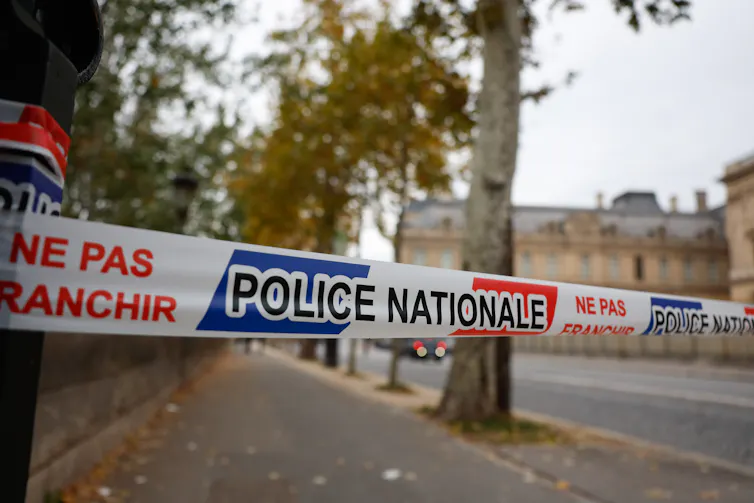
It sounds like the plot of a heist movie. On October 19, priceless items of jewellery and royal regalia were stolen, in broad daylight and in a matter of minutes, from the Louvre’s gilded Gallery of Apollo in Paris. The theft of these items from one of the world’s most famous museums, however, is merely the latest instalment in the chequered history of the crown jewels of France.
In many other countries, the term “crown jewels” is commonly understood as referring to regalia – in particular, the items used as part of the coronation ceremony for a monarch. In France, however, the crown jewels – or, to give them their French title, les joyaux de la Couronne de la France – is a more expansive term. It includes royal regalia, items of jewellery and precious stones.
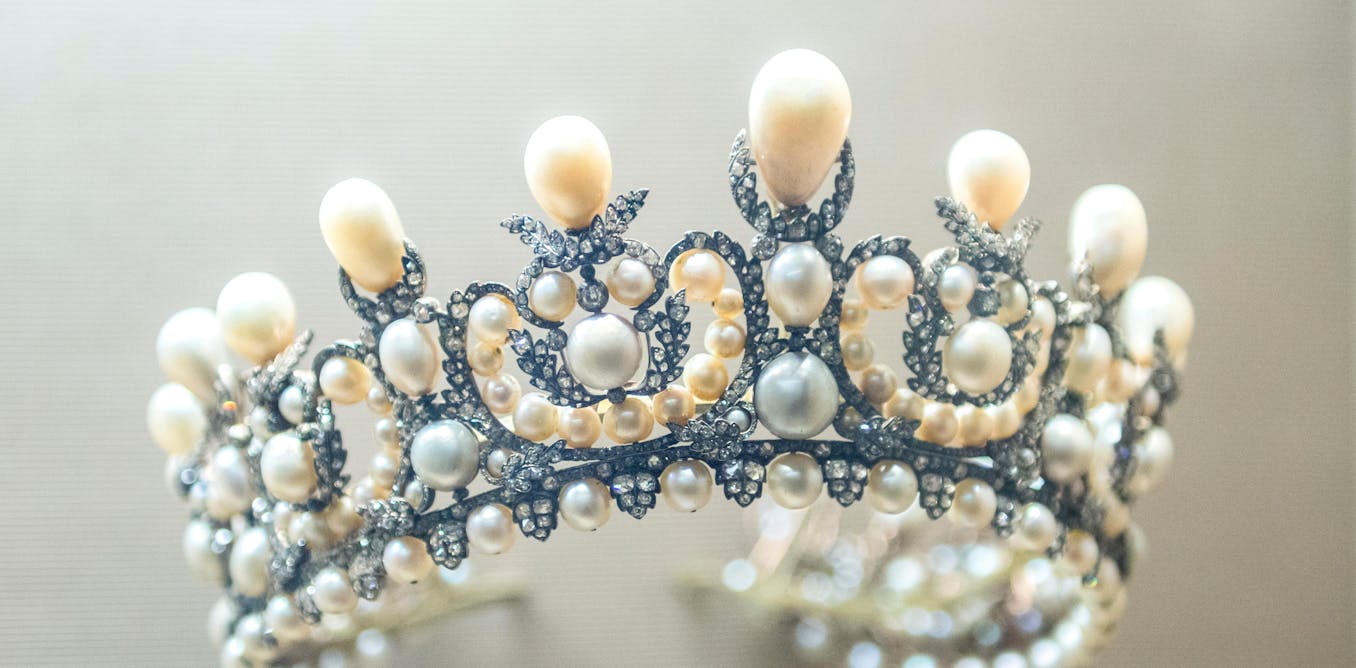
The collection originated in the 16th century, when Francis I decreed that a set of jewels in his possession would become part of the inheritance of his successors. Eight items were stolen, including the reliquary brooch, diadem and large corsage-bow broach, and the 1855 crown of the Empress Eugénie, wife of Emperor Napoleon III.
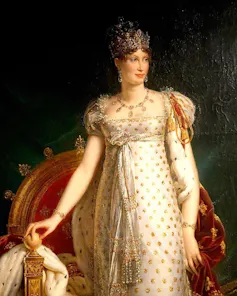
The thieves also took an emerald necklace and earrings made for Empress Marie Louise, second wife of Napoleon I, and a sapphire diadem, necklace and single earring from a matching set linked to Queen Marie Amélie, wife of King Louis-Philippe.
Mohammed Badra
Few items of royal jewellery and regalia survived the French Revolution in 1789. For centuries, the chapter of the Abbey of Saint-Denis, just outside Paris, had been the custodians of the coronation regalia as well as overseeing the preferred burial place of most French monarchs.
Most of the various crowns made for French kings since the Middle Ages were lost or destroyed in revolutionary attacks on the abbey, such as the Crown of Charlemagne and the 13th-century crown of Saint Louis. Both were melted down between 1793 and 1794.
The crown of Louis XV, created in 1722 and on permanent display in the Louvre since the late 19th century, is the only crown from the pre-revolutionary period to survive to this day. This crown was left untouched during the heist, suggesting that the thieves had done their research – the precious jewels that once adorned Louis XV’s crown were removed and replaced with glass replicas in the 1880s.
The history of the jewels
Napoleon I enhanced and expanded the French collection of crown jewels as part of the preparations for his coronation as emperor in 1804, commissioning a new crown and a replica of the medieval Hand of Justice sceptre.
As a nod to the ancient regalia – and, undoubtedly, as a way of cementing Napoleon’s own legitimacy as ruler – this new version of the sceptre included cameos and other jewels from the collection once held at Saint-Denis. This created a sense of continuity between the ancient French monarchies and the emperor born of the French Revolution.
Wiki Commons
The revolutionary upheavals of the 19th century raised questions about the future of the joyaux de la couronne and their place in post-revolutionary France. In 1848, following the creation of the French Second Republic, some republican politicians suggested that the jewels might be sold off. By 1852, however, the republic had fallen and a new emperor – Napoleon III, nephew of Napoleon I and erstwhile president of the republic – had come to power via a coup d’état.
Napoleon III and his wife, Eugénie, significantly expanded the crown jewels during the Second Empire (1852-1870). Yet this period also saw some of the collection go on public display for the first time.
Surviving items of coronation regalia were displayed alongside personal items belonging to previous French rulers as part of the Musée des Souverains (Museum of Sovereigns), which opened at the Louvre in 1852 and traced the history of France through displays devoted to the country’s various ruling dynasties. Here, the crown jewels were presented as an integral part of France’s national heritage, one that included both monarchical tradition and revolutionary transformation.
The fate of the jewels in the latter decades of the 19th century reflected broader debates about the meaning of this national heritage and how to preserve it. In 1878 a selection of the jewels – described in guidebooks as the “Diamonds of the Crown” – generated considerable public interest when they were displayed at the Paris Universal Exhibition.
Increased awareness of the collection prompted renewed calls for the jewels to be sold. Advocates of a sale argued that the Third Republic, founded after the fall of the Second Empire in 1870, should rid itself of these monarchical trappings once and for all and reinvest funds raised in social welfare schemes.
Mohammed Badra
Their opponents pointed to the value of the joyaux de la couronne not just in monetary terms, but as examples of French craftsmanship worth preserving, and symbols of the complex history and heritage of modern France. Eventually, a compromise saw the most historically and aesthetically important items retained by the French Republic, and the rest auctioned off in 1887. Many of the items deemed worthy of preservation found a permanent home in the display cases of the Louvre’s Gallery of Apollo.
Responses to the recent heist suggest that in 21st-century republican France, the place of royal relics in the national heritage is no longer up for debate. Interior minister Laurent Nuñez has described the stolen jewels as having an “inestimable heritage value”. President Emmanuel Macron, meanwhile, commented on social media that the theft was “an attack on a heritage that we cherish because it is our history”.
Much of the immediate reaction to the audacious theft has concentrated on the Louvre’s security problems, rather than on the jewels themselves. The absence of these particular items from the museum’s collections is unlikely to bother most tourists.
Indeed, the Galerie d’Apollon and the crown jewels do not even feature on the Louvre’s suggested “masterpieces” visitor trail. However, the likelihood of increased security at the museum, particularly as it undergoes a major programme of renovation works, will affect every visitor to the Louvre – and potentially museums worldwide, as they tighten security measures in response to this extraordinary theft.

Looking for something good? Cut through the noise with a carefully curated selection of the latest releases, live events and exhibitions, straight to your inbox every fortnight, on Fridays. Sign up here.
