


The 2026 Forbes 400 has 10 members under 40, up from just four last year, as soaring valuations of artificial intelligence companies propel a new generation of entrepreneurs into the ranks of America’s wealthiest people.
Forbes said seven billionaires entered the under-40 group this year, joining Edwin Chen, founder of AI data company Surge AI, who was the youngest Forbes 400 member last year.
The minimum fortune required to make this year’s list rose to a record $4.4 billion, $600 million higher than in 2025. The 400 members are collectively worth an estimated $8 trillion, up from $6.6 trillion a year earlier.
Forbes calculated fortunes using stock prices as of Sept. 4 and estimates of holdings in privately owned companies.
Here are the youngest AI-linked billionaires among them, ranked by age.
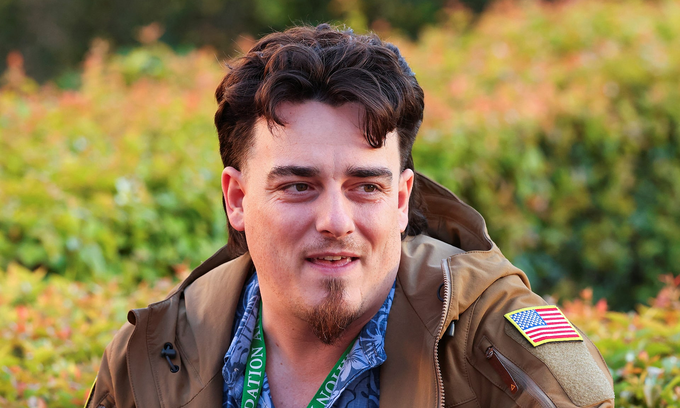
Steven Hao
Steven Hao, co-founder and chief technology officer of AI startup Cognition. Photo courtesy of Cognition
Hao, 30, is the youngest newcomer to this year’s Forbes 400 after the surging valuation of AI coding startup Cognition pushed his estimated fortune to $5.8 billion.
A former engineer at AI data company Scale AI, Hao cofounded Cognition with Scott Wu and Walden Yan in 2023 and serves as its chief technology officer. The three met through competitive programming and are all gold-medal competitive coders.
Cognition is the developer of Devin, an AI agent designed to perform software engineering tasks such as writing, modifying and debugging code.
The company raised $2 billion in September at a valuation of $48 billion, more than four times its $10 billion valuation at the beginning of the year, Bloomberg reported.
The rapid growth has been accompanied by surging business. Cognition’s annualized revenue reached about $1 billion in September, roughly doubling from four months earlier. Its customers include Nvidia, Citigroup and Mercedes-Benz.
Palmer Luckey

Palmer Luckey, CEO, Anduril attends the Reagan National Defense Forum at the Ronald Reagan Presidential Library in Simi Valley, California, U.S. Dec. 6, 2025. Photo by Reuters
The 33-year-old, whose fortune is estimated at $5.9 billion, built his first virtual reality headset as a teenager and founded Oculus VR in 2012. Facebook bought the company for $2 billion in cash and stock two years later, when he was 21.
He went on to cofound Anduril in 2017, building autonomous aircraft, drones, sensors and AI-powered command software for militaries.
Anduril’s rapid expansion has significantly increased Luckey’s fortune. The company raised $5 billion in May at a $61 billion valuation, more than double its value less than a year earlier.
Its Lattice software uses AI to connect and coordinate autonomous systems and has been deployed in counter-drone, missile defense and other military programs.
The company is also expanding manufacturing. Reuters reported in March that Anduril was beginning production of high-speed FURY combat drones at a new $1 billion manufacturing complex in Ohio that is expected to employ more than 4,000 people over the next decade.
Sam McCandlish
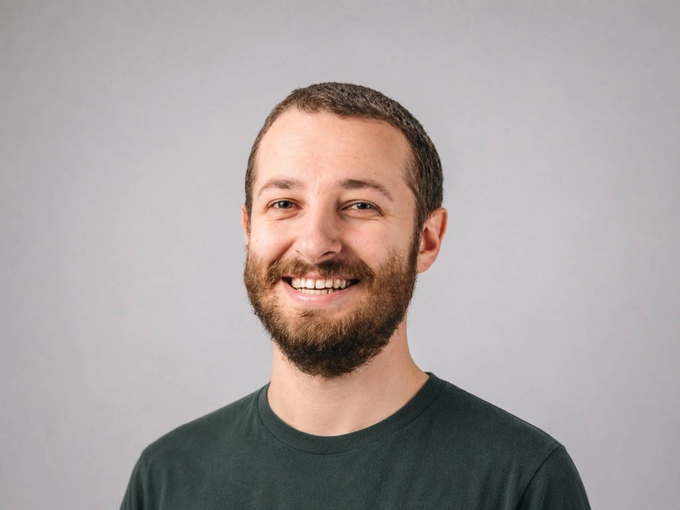
Sam McCandlish, co-founder and chief architect of Anthropics. Photo from McCandlish’s LinkedIn
McCandlish, 36, earned a doctorate in theoretical physics from Stanford University in 2017 before joining OpenAI.
There, he was among the researchers studying how AI systems improve as developers increase the amount of computing power used to train them. A 2018 OpenAI study led by McCandlish examined the relationship between AI performance and the computing resources used in training. He later coauthored influential research on scaling laws for neural language models.
McCandlish left OpenAI and cofounded Anthropic with six former colleagues in 2021. He is now the company’s chief architect, according to Anthropic.
His estimated $15.5 billion fortune reflects Anthropic’s extraordinary increase in value.
The Claude developer raised $65 billion in May at a post-money valuation of $965 billion. The company has grown into one of OpenAI’s most prominent competitors and is preparing for an IPO that could value it at more than $2 trillion, according to Reuters.
Greg Brockman
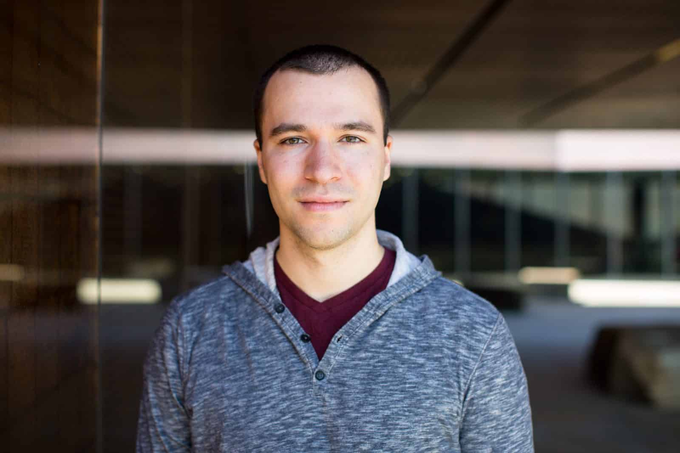
Greg Brockman, co-founder and president of OpenAI. Photo from Brockman’s LinkedIn
Brockman, 37, is the wealthiest newcomer to the Forbes 400 this year, with an estimated fortune of $25.5 billion.
He attended Harvard University and Massachusetts Institute of Technology before leaving college and joining payments startup Stripe, where he became chief technology officer.
Brockman cofounded OpenAI in 2015 alongside a group that included Sam Altman and Elon Musk and now serves as its president.
The value of his OpenAI stake became public during Musk’s lawsuit against the company earlier this year.
Brockman acknowledged in a California court in May that his stake in the ChatGPT maker was worth close to $30 billion, Reuters reported. He also disclosed investments in other technology companies.
OpenAI, which released ChatGPT in late 2022 and helped trigger the global generative AI boom, has since raised more than $100 billion from investors to finance computing infrastructure, research and expansion.
Jack Clark
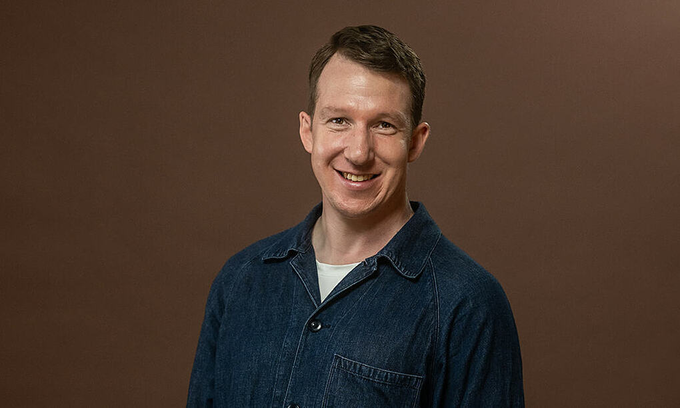
Jack Clark, cofounder and head of policy at Anthropic. Photo courtesy of Import AI
Clark, 37, took a different path into the AI industry, beginning as a technology journalist before becoming an executive at two of its most prominent companies.
He covered AI for Bloomberg before joining OpenAI in 2016 as policy director. Five years later, he left with six colleagues to establish Anthropic.
Clark now leads the Anthropic Institute, the company’s research organization focused on the societal implications of advanced AI, according to Anthropic.
He is also the author of Import AI, a newsletter examining developments in AI. His estimated $15.5 billion fortune comes largely from his stake in Anthropic.
Edwin Chen

Edwin Chen, CEO and founder of Surge AI. Screenshot from Youtube/20VC with Harry Stebbings
Chen founded Surge AI in 2020 after studying mathematics, linguistics and computer science at MIT and working for technology companies including Google, Facebook and Twitter.
The company provides human-generated and evaluated data used to train and improve AI models, an industry that has grown rapidly as developers seek higher-quality data for increasingly sophisticated systems.
Surge said it generated $1.2 billion in revenue in 2024 without raising venture capital, according to Business Insider.
Forbes estimates the 38-year-old owns about 75% of Surge, valuing his stake at roughly $18 billion.
Daniela Amodei
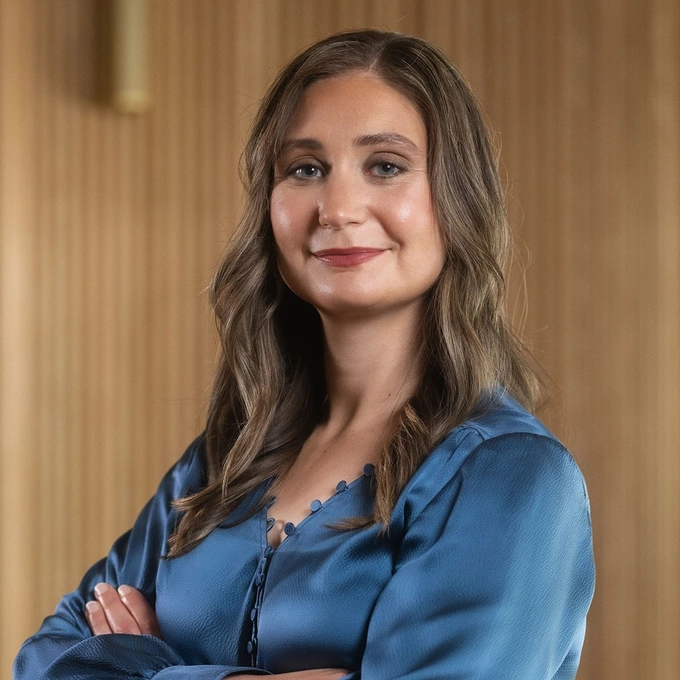
Daniela Amodei, co-founder and president of Anthropic. Photo courtesy of Sequoia Capital
Amodei’s path to becoming one of America’s wealthiest AI entrepreneurs did not begin in computer science.
She graduated from the University of California, Santa Cruz, in 2009 with a bachelor’s degree in literature and a minor in politics.
After working at financial technology company Stripe, she joined OpenAI, where she held roles in recruiting, operations, safety and policy. In 2021, she cofounded Anthropic with her brother Dario Amodei and five other former OpenAI employees, including Tom Brown, Clark and McCandlish. She serves as president of the company.
Now worth an estimated $15.5 billion, Amodei ranks as the second-richest self-made woman in the U.S., according to Forbes.
Despite building her fortune in AI, Amodei, 39, has defended her humanities education. “I actually think studying the humanities is going to be more important than ever,” she said in an February interview with ABC News.
“The things that make us human will become much more important instead of much less important,” she said. “And what I mean by that is when we look to hire people at Anthropic today, we look for people who are great communicators, who have excellent EQ and people skills, who are kind and compassionate and curious and want to help other people.”
Tom Brown
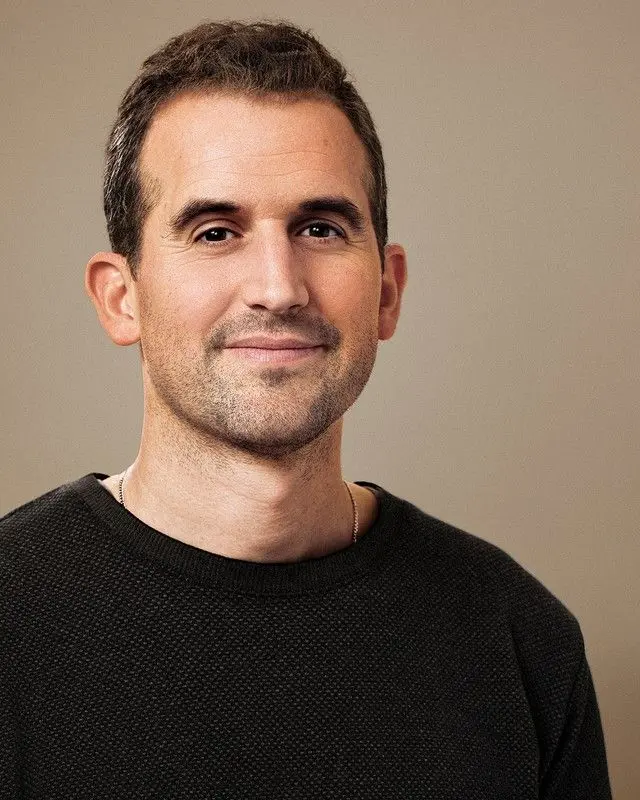
Tom Brown, co-founder and chief compute officer of Anthropic. Photo courtesy of Anthropic
Brown, 39, studied computer science and cognitive science at MIT before entering Silicon Valley’s startup scene. After leaving social startup Grouper, which he cofounded, Brown spent months teaching himself machine learning before joining OpenAI in 2016.
Brown contributed to research that helped pave the way for reinforcement learning from human feedback, a technique widely used to train modern AI systems. In 2020, he also worked on research into AI scaling laws and led the engineering effort behind the paper introducing GPT-3, the large language model that became a foundation for ChatGPT.
He left OpenAI and cofounded Anthropic with six former colleagues in 2021. As Anthropic’s chief compute officer, Brown oversees efforts to secure the vast computing resources needed to train and run its AI models. The company uses chips from Amazon, Nvidia and Google, while his team has also negotiated multibillion-dollar computing agreements.
His stake in Anthropic accounts for most of his $15.5 billion fortune. Brown has pledged to donate 80% of his wealth.
