

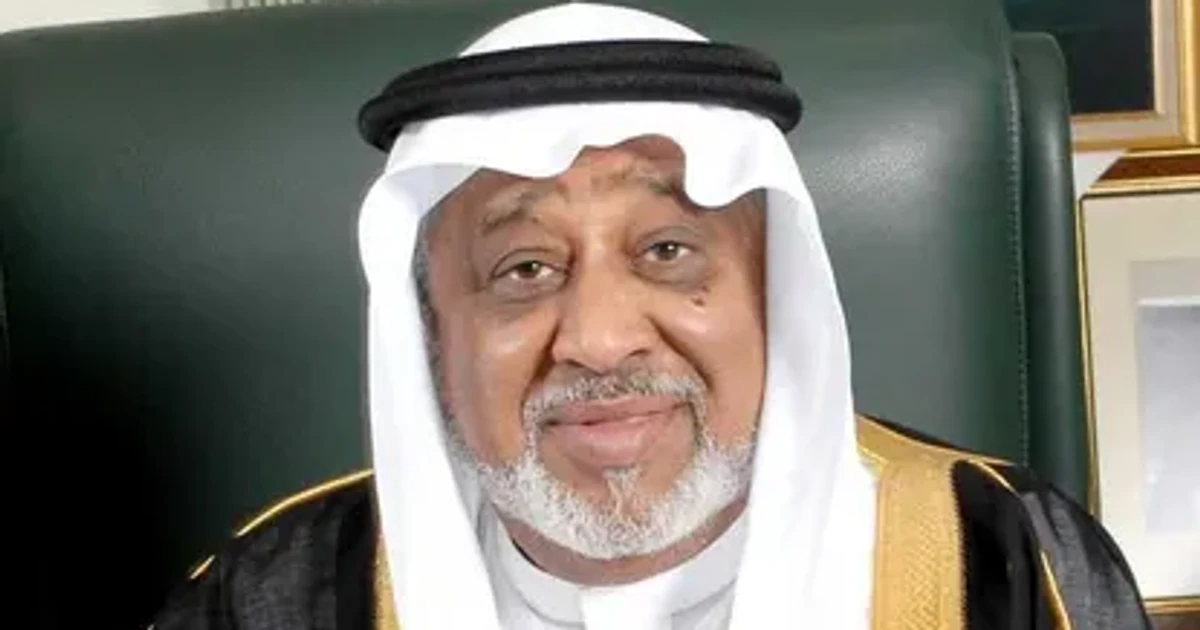
The latest ranking, published on 1 August, places the Saudi-Ethiopian billionaire at No. 375 globally. His net worth has risen by $1.67 billion, or 19.7%, since the start of the year, including a $33.7 million increase in the latest daily update.
The rebound reinforces Al-Amoudi’s position as Ethiopia’s wealthiest individual and reflects stronger valuations across parts of his industrial, infrastructure and energy investments.
According to the Index, Preem, Sweden’s largest oil refinery, remains the largest asset underpinning Al-Amoudi’s estimated fortune. His wealth also reflects investments spanning infrastructure, property, agriculture, energy and mining across Sweden, Saudi Arabia and Ethiopia.
Much of his business empire is held through MIDROC, one of Ethiopia’s largest privately owned conglomerates.
The group has investments in gold mining, agriculture, manufacturing, construction, healthcare, hospitality, real estate and energy, making it one of the country’s most influential private-sector investors. MIDROC Gold, Ethiopia’s largest commercial gold producer, has also benefited from sustained strength in global gold prices.
The latest milestone marks another chapter in Al-Amoudi’s financial recovery after Saudi Arabia’s 2017 anti-corruption crackdown, during which he was detained alongside dozens of princes, ministers and prominent businessmen.
Although he was released the following year, the episode cast uncertainty over parts of his business empire and weighed on perceptions of his wealth for years.
Despite Bloomberg now valuing his fortune above $10 billion, Al-Amoudi did not appear on Forbes’ annual World’s Billionaires list.
The difference largely reflects methodology. Bloomberg updates its Billionaires Index daily using market movements and estimates of privately held assets, while Forbes applies its own valuation criteria and may exclude individuals when ownership structures or private asset values cannot be independently verified to its standards.
While Al-Amoudi has maintained a relatively low public profile in recent years, his businesses remain deeply embedded in Ethiopia’s economy through investments in mining, agriculture, manufacturing, real estate and energy.
His wealth recovery also comes as higher commodity prices and stronger valuations across industrial assets have supported billionaire fortunes globally. Gold prices, in particular, have remained near historic highs, strengthening the value of mining businesses and related investments.
The rebound highlights how quickly billionaire fortunes can recover as asset values rise, while also illustrating how different valuation methods can produce contrasting pictures of the world’s wealthiest individuals.
For investors, Al-Amoudi’s return to the $10 billion club underscores the resilience of one of Ethiopia’s largest private business empires, even as Forbes continues to leave him off its billionaire rankings.
