

Words by Andrew McGrotty
Not so long ago, finding a hair stylist at a luxury hotel meant hunting down a lone barber chair in a windowless room somewhere between the spa and the laundry. The kind of place you ended up in out of necessity rather than desire. That version of hotel grooming is largely a relic now, replaced by something far more deliberate and, in the best cases, genuinely worth travelling for.
Part of what’s changed is cultural. For a growing number of travellers, men included, grooming has shifted from routine upkeep to something closer to ritual. The hotel groups paying attention have responded by treating these spaces with the same seriousness they once reserved for restaurants or spas. There’s a practical business case behind it too. Grooming lounges tend to be compact, generate strong revenue relative to their footprint, and perhaps most importantly, bring guests back. Not always for the room or the restaurant, but for the barber they’ve been seeing on every visit for the past three years.
The gentleman’s club, reinvented
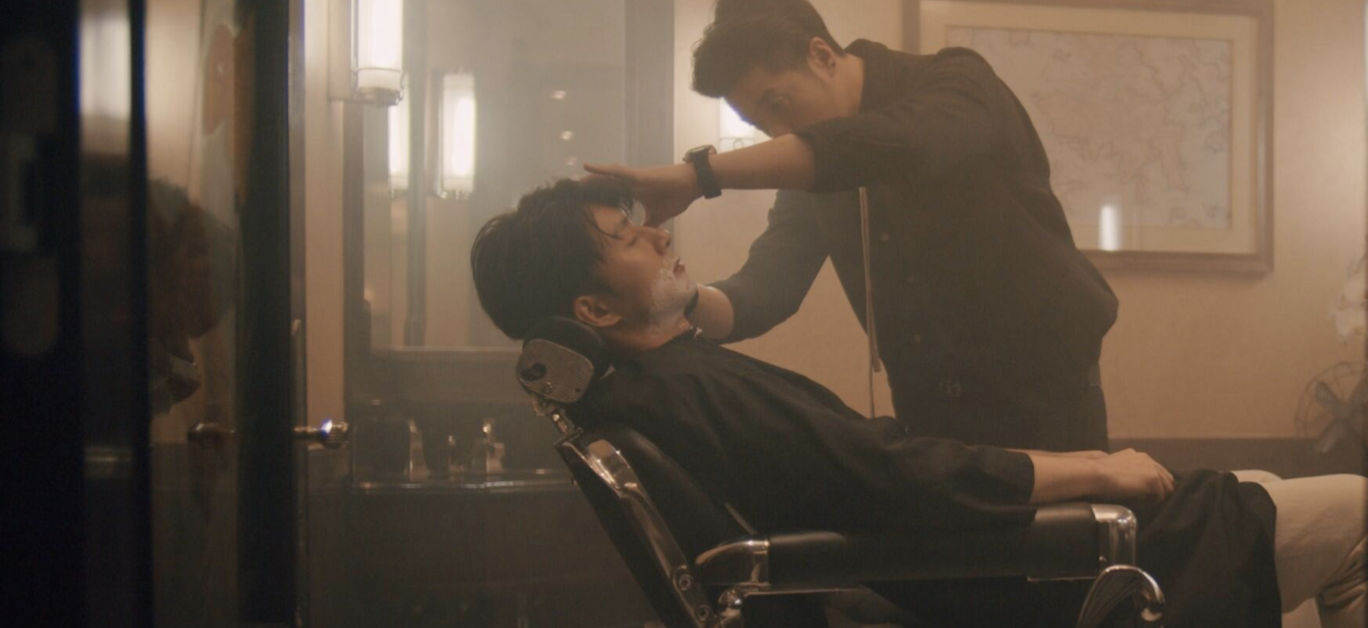
Some properties have understood this for decades. The Mandarin Barber at Mandarin Oriental, Hong Kong opened in 1963, which means it predates most of its current clientele by some margin. Situated on the second floor of the hotel and designed in the Art Deco style of 1930s Shanghai, it carries the atmosphere of a private club that happens to offer haircuts, rather than a salon that happens to sit inside a hotel. Six traditional barber chairs, warm panelling, and a team of barbers who have spent the better part of their careers refining their craft.
The menu extends well beyond a cut and a shave. Hot-towel treatments, facials, massage, waxing and the hotel’s celebrated Shanghainese pedicure, a traditional technique that has been on the menu since the beginning, are all available. What The Mandarin Barber worked out early is that the haircut was never really the point. The visit itself was. Guests book it the way they’d book a table at a favourite restaurant, because the experience of being there justifies the trip on its own terms.
London: where grooming becomes identity
The Londoner on Leicester Square arrived at the same conclusion by a different route. The hotel, the first to describe itself as a super-boutique, houses Joe Vipond Gentlemen’s Grooming within The Retreat, a subterranean wellness floor that also takes in a pool, hydropool, spa and Hiro Miyoshi Hair and Beauty. As a grooming proposition, it means business.
Joe Vipond operates by appointment only and has built a following among footballers, executives and people who are simply very particular about who they let near their hair. The underlying philosophy, evident in everything from the booking process to the products on the shelves, is that grooming is an expression of self-respect. The services themselves cover precision cuts, cut-throat shaves and signature facials, but what clients tend to come back for is the reliability and discretion of the whole experience.
The fit between Joe Vipond and The Londoner is telling. The hotel has consistently presented itself around a certain kind of modern, understated luxury, and the grooming space reflects that without effort. It doesn’t read as an afterthought or a bolt-on, it feels like it was always meant to be part of the picture.
Beauty rooms as status amenity
The best hotel grooming spaces are no longer the exclusive territory of the traditional barbershop, and that evolution matters. A new generation of beauty and treatment rooms, built with a broader range of guests in mind, is arriving in five-star properties with genuine purpose behind them.
Rosewood Bangkok’s hair and nail salon offers a useful sense of where this is heading. The space is framed around wellness rather than conventional beauty, which translates in practice to bespoke treatments, naturally inspired products and surroundings that feel nothing like a standard hotel facility. The lighting is warm, the interiors are thoughtfully put together, and there’s no sense of guests being moved efficiently through a system. Someone could spend two hours there before a formal dinner and come away feeling they’d had an afternoon to themselves rather than a booking in someone’s diary.
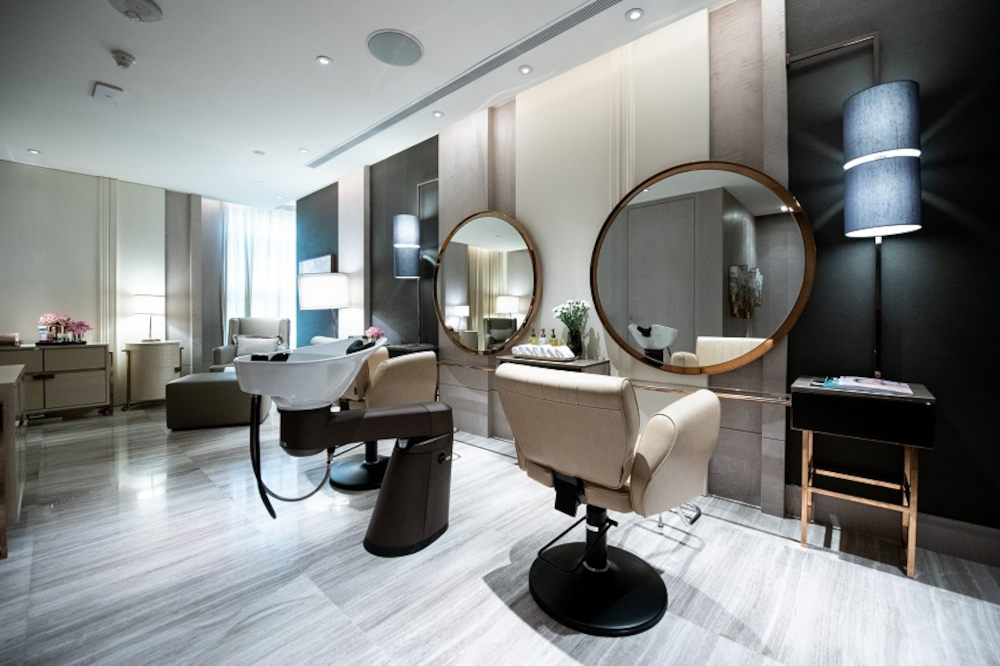
The shift in design approach is both deliberate and increasingly common. The clinical brightness that defined traditional hotel salons, white walls, overhead lighting, the particular smell of a nail bar, is giving way to something more residential. Artwork, proper seating, lighting that actually flatters. These are spaces built for staying in, not passing through.
From spa annexe to grooming campus
At the upper end of the market, the ambition has moved beyond individual rooms entirely. What’s taking shape is something closer to a grooming campus, a connected series of spaces that can take a guest from arrival through every stage of preparation without them needing to leave the building. It sounds extravagant until you consider who it’s designed for.
Mandarin Oriental has operated along these lines at its flagship properties for years, running The Mandarin Barber alongside The Mandarin Salon and a full spa across several floors. The thinking is straightforward: if guests can take care of everything in one place, they will. In Dubai, Atlantis The Royal has taken the same approach at scale, incorporating grooming and beauty into the hotel’s broader lifestyle offer from day one rather than adding it in afterwards. In a market where five-star is the baseline expectation, the quality of the grooming experience has become one of the things that actually sets properties apart.
The design language across these spaces tends to follow a consistent brief, somewhere between a private members’ club and a high-end spa, with enough visual appeal to translate well on social media. Statement mirrors, well-arranged product displays, lighting that works for a phone camera as readily as it does in person. Hotel groups have recognised that a well-designed grooming space generates content as naturally as it generates income, and they’re building with that in mind.
The business case for beautiful grooming
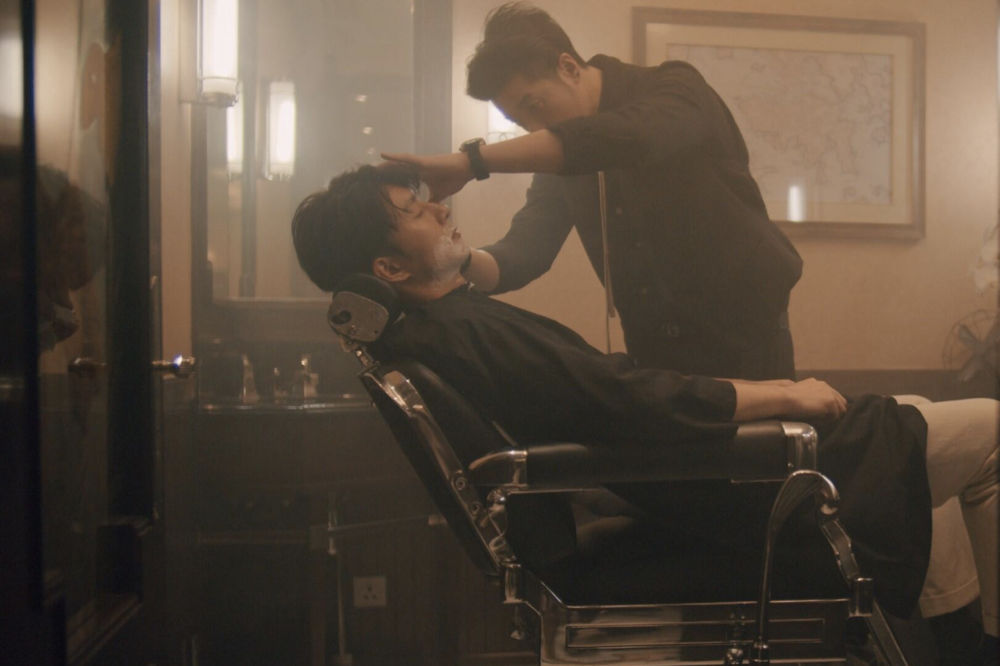
The economics are straightforward enough to be worth stating plainly. Grooming is a high-frequency category. Guests who wouldn’t consider booking a 90-minute treatment will readily come in for a blow-dry before a morning meeting or a shave before a black-tie dinner. The rate at which hotel guests convert to grooming clients is considerably higher than for most other spa services, and the spend per visit holds up well.
For seasoned business travellers in particular, the expectation of a hotel as a fully-functioning support system has become standard. Skincare, haircare, wardrobe, jetlag, all of it managed on-site. A grooming lounge that genuinely delivers on that expectation creates loyalty of a kind that no points programme can replicate. Guests who establish a relationship with a barber or therapist at a hotel they visit regularly will continue returning specifically for that reason, independent of whatever else might change about the property.
The new standard
Hotel grooming spaces have become one of the clearest signals of how seriously a property takes its guests. The investment is real, and making it communicates something about the hotel’s values that no marketing copy quite manages.
From the 1930s Shanghai atmosphere of The Mandarin Barber to the appointment-only precision of Joe Vipond at The Londoner, the best examples share a simple understanding: guests come wanting to leave in better shape than they arrived, in every sense of the phrase. The hotels that have taken that seriously are building spaces worth seeking out in their own right. The ones that haven’t are still hiding a barber chair next to the laundry.
