

King Charles, as the new custodian of the Royal Collection, will now be facing ethical questions about artefacts that were seized during British military operations in Africa, when his great-great-great-grandmother, Queen Victoria, was on the throne. These looted objects came primarily from countries that are now Nigeria, Ghana and Ethiopia.
Unlike most UK national museums, the Royal Collection is able to deaccession, provided that this is advised by its trustees and authorised by the monarch. The collection is not owned personally by Charles, but he holds it in trust as sovereign to pass on to his successor. Although this might seem to bar deaccessioning, in the past it has occasionally been done when deemed appropriate, so presumably the monarch’s traditional
obligation is to hand on the overwhelming bulk of the collection.
There have been at least two occasions when Queen Elizabeth II returned looted material. On a state visit to Ghana in 1961 she presented five Asante objects to the National Museum in Accra: two regal chairs, two stools and a state umbrella. Four years later the queen restituted a crown and great seal during a visit to Ethiopia.
A Royal Collection spokesperson tells The Art Newspaper: “Questions concerning the restitution of objects are a matter for the trustees of the Royal Collection Trust, who take advice from a range of external bodies including government.”
The current chairperson of the trust, a charity that administers the collection, is the banker James Leigh-Pemberton, with Charles as the patron. Two new trustees, who were appointed in April 2022, will bring a fresh perspective to objects seized during the colonial period.
Tonya Nelson, who was brought up in America, has a legal background. Before her appointment, she organised an International Council of Museums (Icom) meeting to discuss “restitution and decolonisation”. Reporting on this for The Art Newspaper in September 2019, she wrote that the meeting had discussed dismantling “the hierarchies and structures that exclude certain voices and perspectives from the work of museums”.
Monisha Shah, the other new trustee, is an India-born media professional who focuses on the creative industries. She earlier served as a trustee of the Tate and the National Gallery.
Massacres, battles and wars
So how did contested material enter the Royal Collection? The Nigerian objects were seized during the Punitive Expedition against the Oba (king) of Benin in 1897, following a massacre of Royal Niger Company officials and their armed African porters. The Oba was overthrown and his Benin kingdom ended. Thousands of royal objects, including the famed Benin Bronzes, were looted in his capital, Edo (now Benin City).
The Ghanaian material came from the Asante (Ashanti) kingdom. During the third Anglo-Ashanti war of 1873-74 British forces occupied the capital Kumasi, destroying the royal palace and looting the royal regalia of the Asantehene (king) Kofi Karikari. He was forced to abdicate. The regal treasures, many of them made of gold, were taken to Britain.
The Royal Collection’s Ethiopian objects were looted after the battle of Maqdala (Magdala) in 1868. Rather than surrender, Emperor Tewodros II shot himself, reputedly with a gun that had been given to him by Queen Victoria. British troops looted royal possessions and churches.
Restitution will hardly be top of the royal agenda, and when it is considered, Charles will seek advice from the director of the Royal Collection. But wishing to strengthen Commonwealth relations, the new monarch is likely to see the importance of taking positive action. Having just been crowned, he will also be acutely sensitive to the significance of traditional royal regalia.
The current Asantehene, Otumfuo Osei Tutu II, came to London for the coronation and called on Charles on 4 May. No doubt the Asante ruler felt it would be an inappropriate occasion to raise the matter, but he must have been only too aware that some of his forebear’s regalia was on display in the grand vestibule at Windsor Castle.
The Asantehene also met the director of the British Museum, Hartwig Fischer, calling for the return of Asante objects seized during the 19th century. A museum spokesperson has confirmed that the possible loan of artefacts to Ghana was discussed.
Key pieces in the royal collection
Royal Collection Trust; © His Majesty King Charles III
Benin ivory leopards (19th century), on long-term loan to the British Museum
A pair of carved ivory leopards, made from ten tusks, with spots of inlaid copper (probably reused from rifle percussion caps). Leopards are regarded as “kings of the forest”, representing a symbol of regal authority in Benin. After the capture of Benin by British troops in 1897 this pair was acquired by Admiral Harry Rawson, who presented them to Queen Victoria. In 1924 George V sent them on long-term loan to the British Museum, where they remain and are on show in the Sainsbury Africa Galleries.
Royal Collection Trust; © His Majesty King Charles III
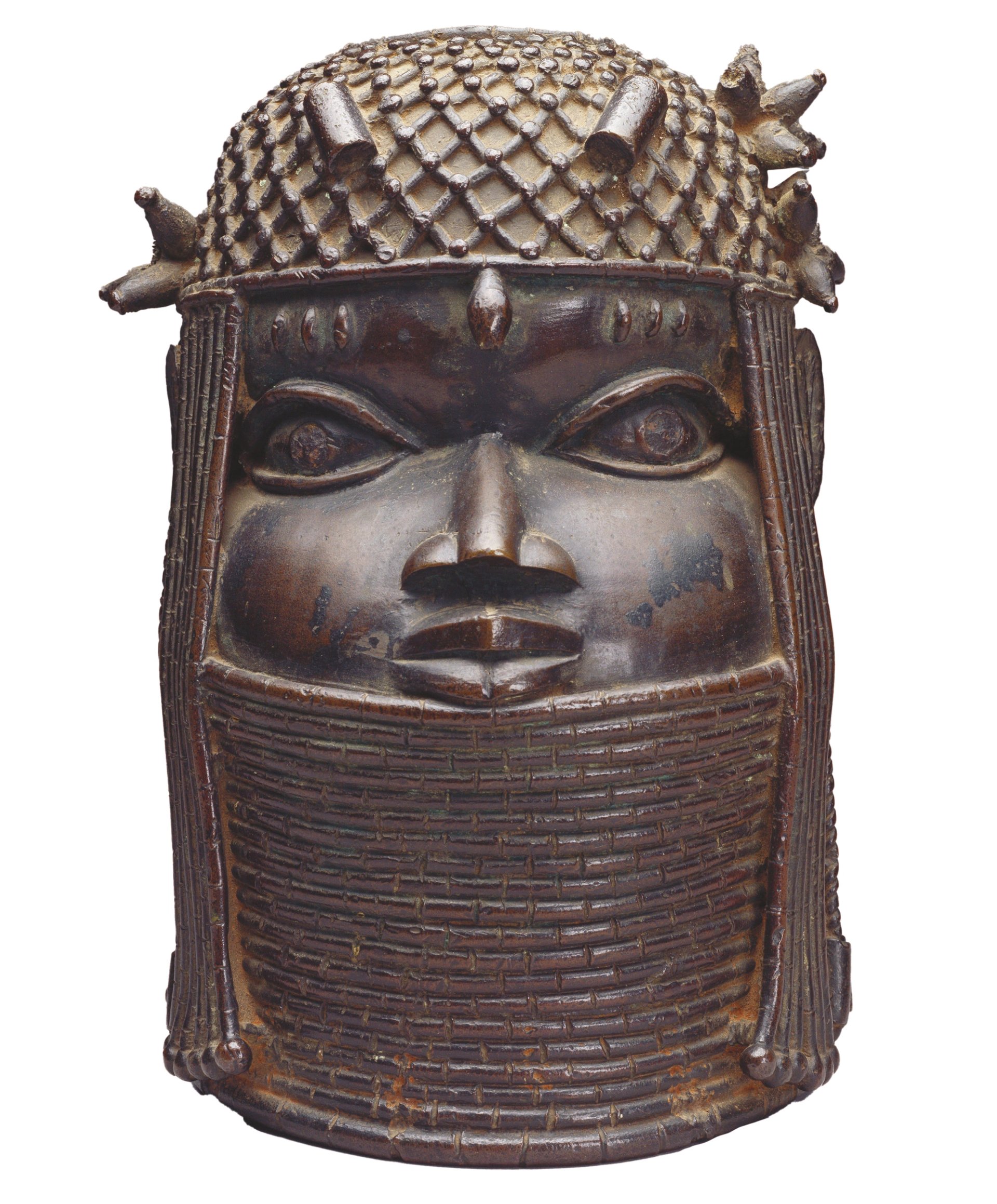
Benin head of an Oba (around 1650), on display at Windsor Castle
The bronze head of an Oba originally stood on a shrine in the royal palace until the sculpture was seized during the 1897 expedition. It was brought to the UK by an officer and later sold. The sculpture was bought in the late 1940s or early 1950s for the Nigerian National Museum. As The Art Newspaper has revealed, in 1973 it was seized from the Lagos museum by General Yakubu Gowan, the Nigerian president, who presented it to Queen Elizabeth during his state visit. It has therefore been looted twice.
Royal Collection Trust; © His Majesty King Charles III
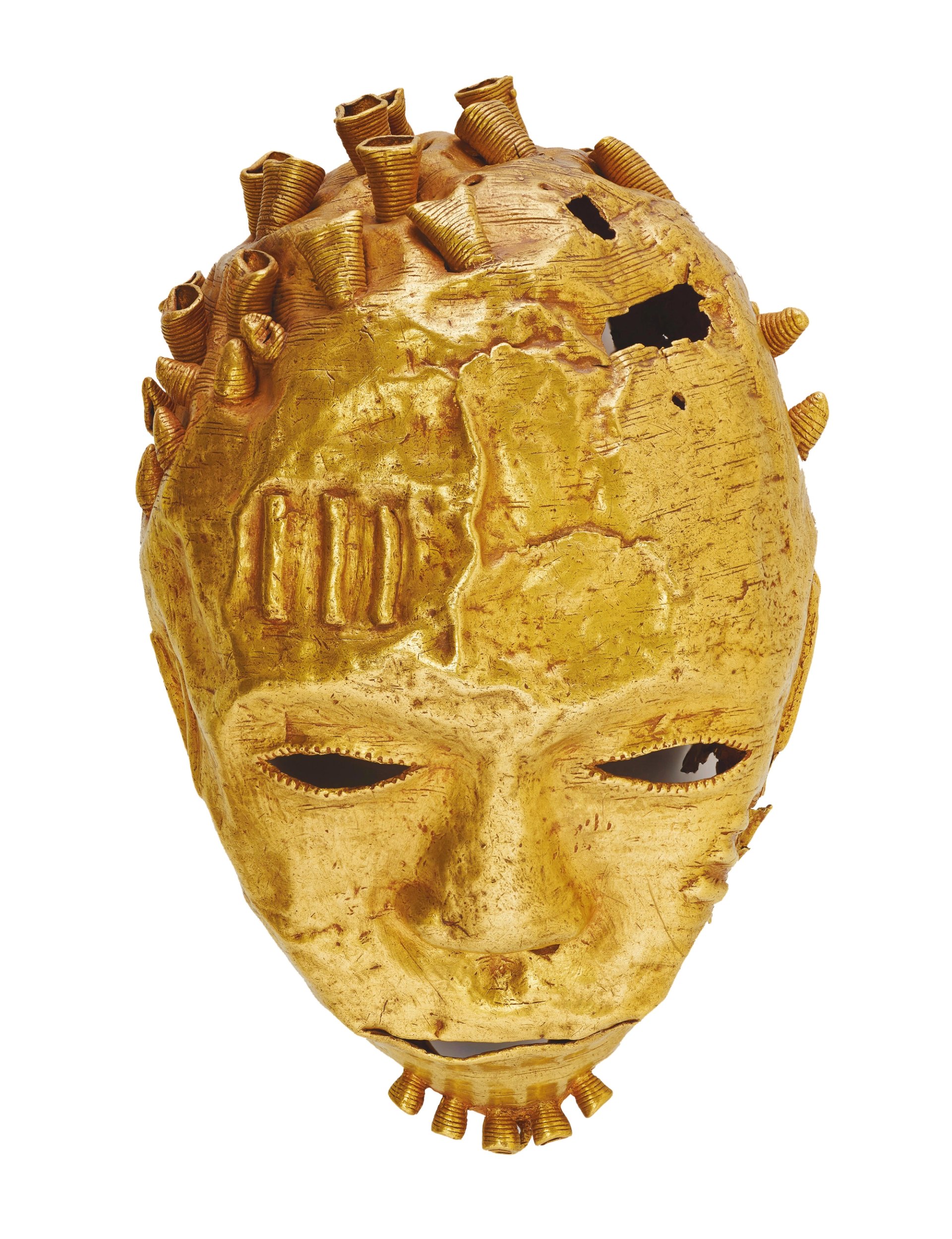
Asante gold trophy head (19th century), on display at Windsor Castle
Such golden hollow masks with human facial features weremade using a sophisticated lost-wax technique. They represented defeated enemies of the Asante and were attached to ceremonial swords. This example was part of the royal regalia of Asantehene Kofi Karikari and was seized by British troops in Kumasi in February 1874. Three months later it was purchased by Queen Victoria.
Royal Collection Trust; © His Majesty King Charles III
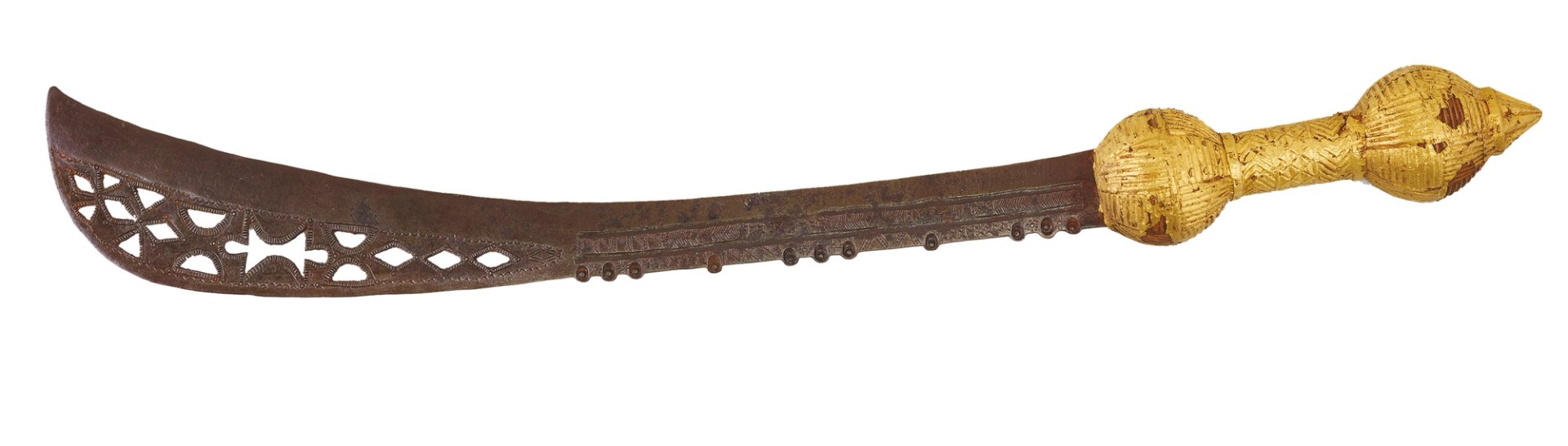
Asante state sword (19th century), on display at Windsor Castle
These state swords were worn by high-ranking members of the Asante court. The wooden grip is covered in gold leaf. It, too, is said to have been owned by Asantehene Karikari. After its seizure in 1874, General Ponsonby wrote to Queen Victoria, saying that the British officers “consider it their duty as well as an honour to submit these articles—or the best of them—to Your Majesty before publicly selling them”.
Royal Collection Trust; © His Majesty King Charles III
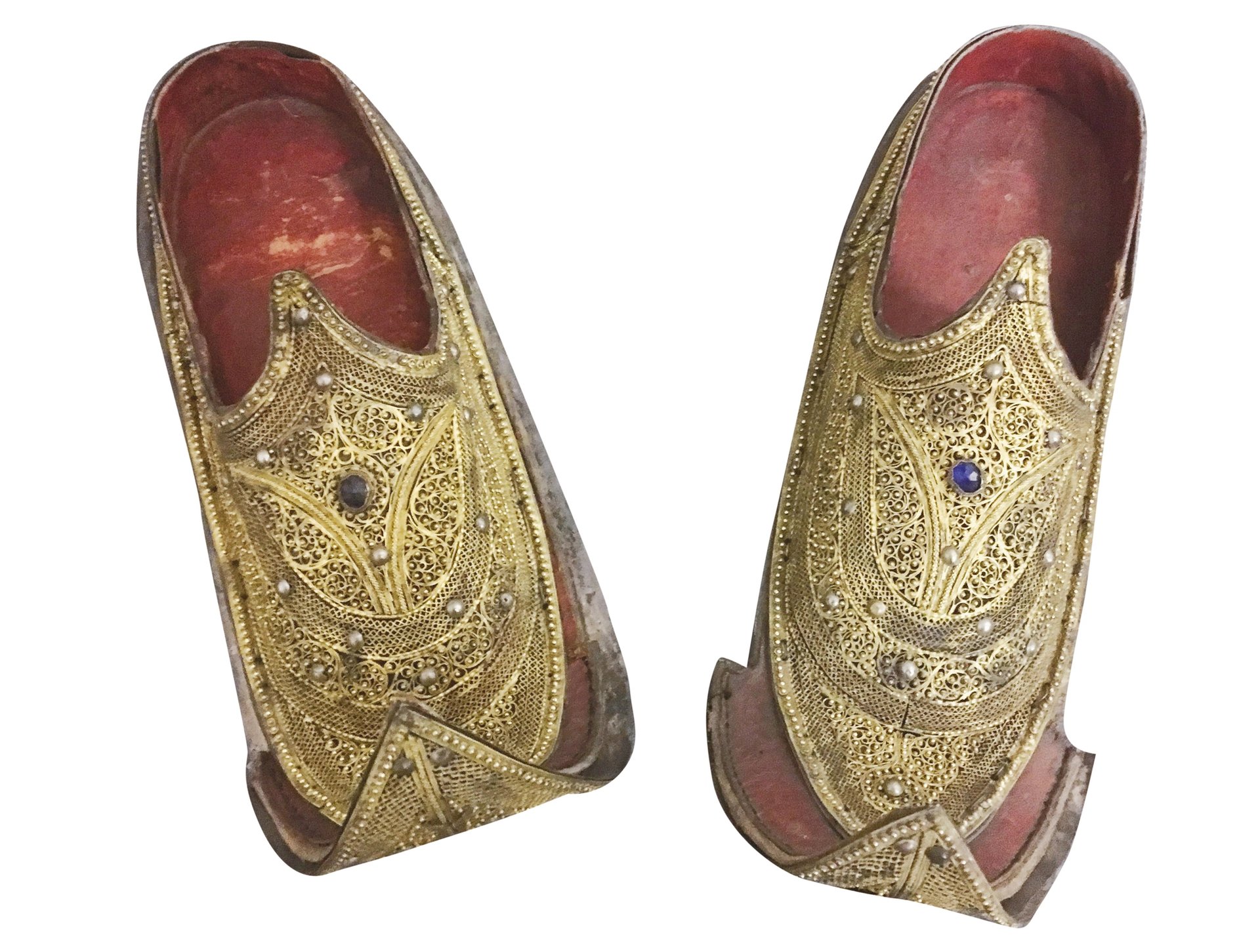
Maqdala emperor’s slippers (mid 19th-century), not on view
This pair of slippers, decorated with gold filigree and set with amethysts, belonged to Emperor Tewodros. They were seized by General Robert Napier at Maqdala in 1868, after the emperor shot himself, and then presented to Queen Victoria. For conservation reasons, the slippers are not on display.
Royal Collection Trust; © His Majesty King Charles III
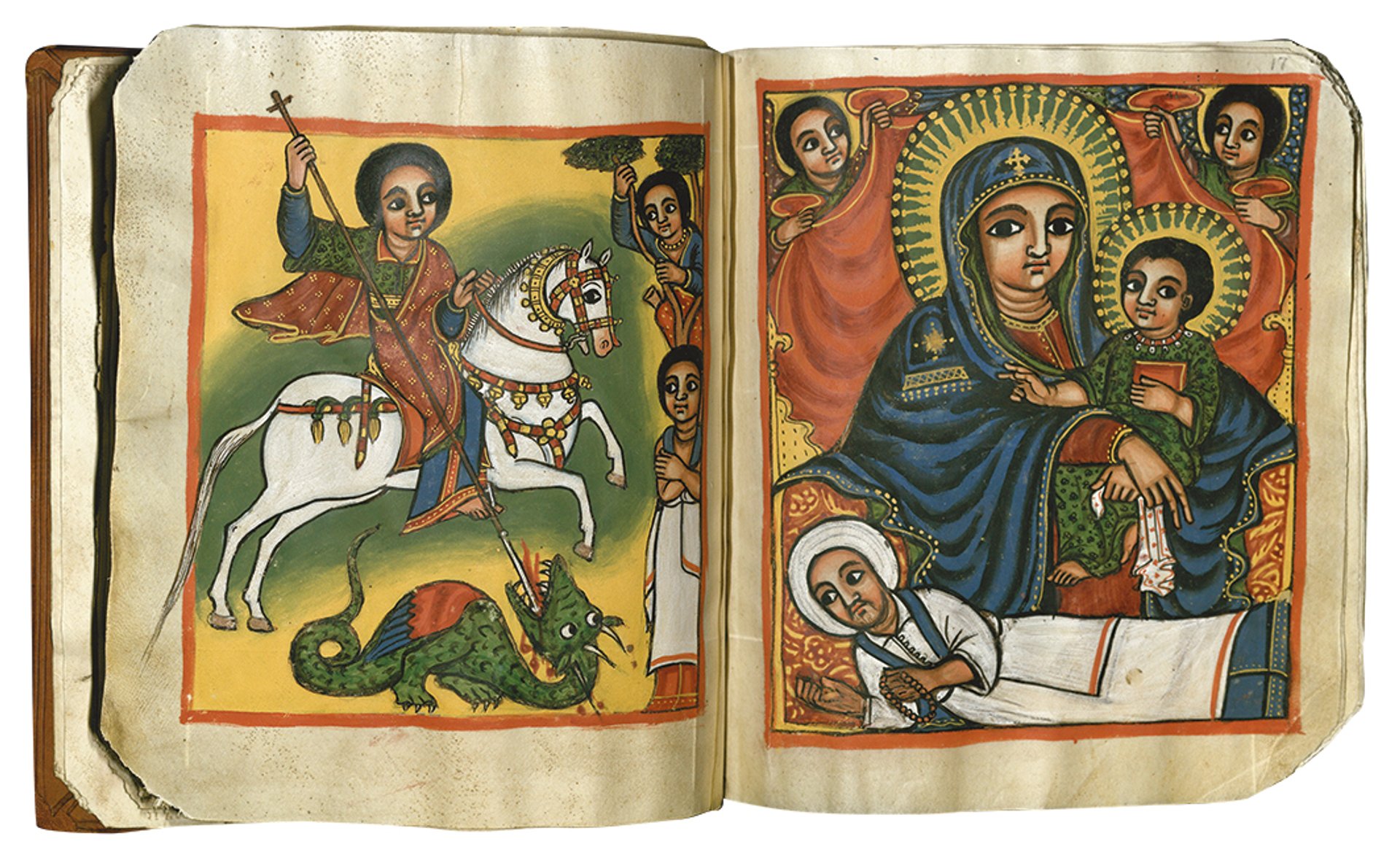
Maqdala miracles manuscript (1766), not on view
An illuminated manuscript on vellum of the Miracles of the Virgin Mary in Ge’ez, the Ethiopian liturgical language. The book includes 13 painted pages, including a Virgin and Child, inspired by the Byzantine icon (possibly sixth century) now at Rome’s Santa Maria Maggiore. The Miracles was seized from the Church of Madhane Alam at Maqdala and quickly acquired by the British Museum’s agent, Richard Holmes. He presented it to Queen Victoria. The manuscript was rebound in London by the India Office in the late 19th century. It, too, is not on view for conservation reasons.
