


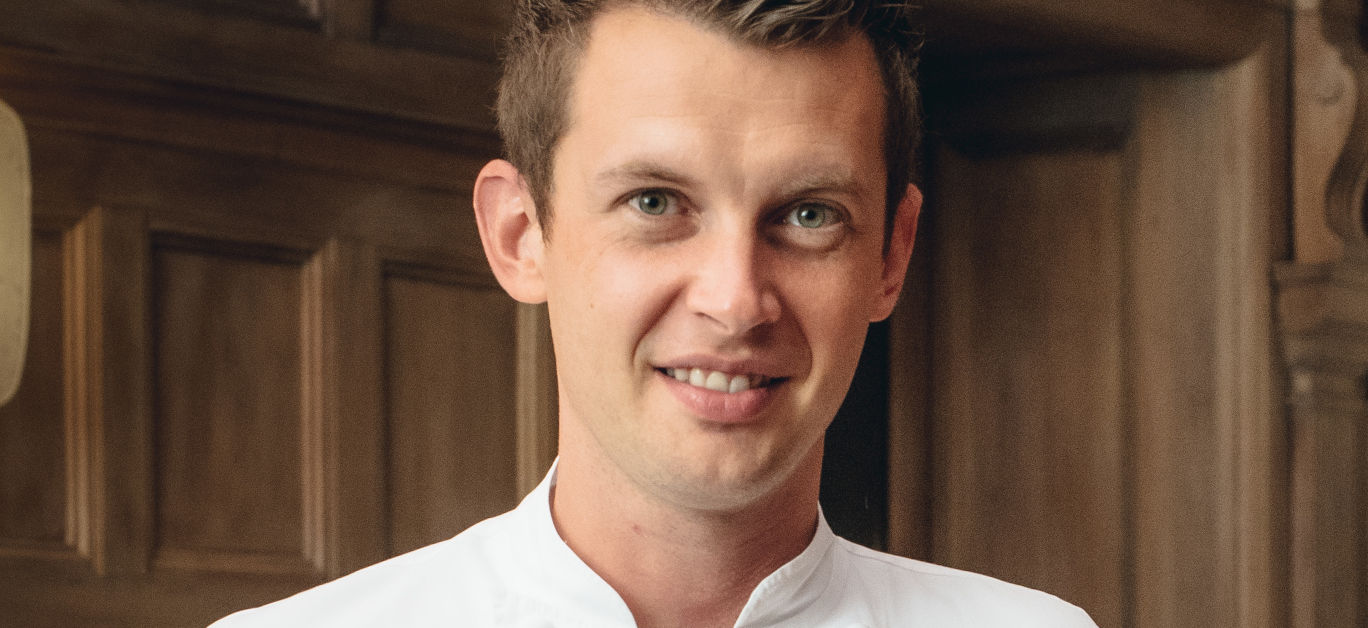
Marco Zampese grew up in Marostica, Northern Italy, surrounded by fresh, seasonal produce from his farming grandparents. This instilled a deep respect for ingredients and led him to study at the Giuseppe Maffioli hospitality school and the University of Padua.
In 2014, Marco joined Hélène Darroze at The Connaught in London’s Mayfair, becoming executive chef and helping secure three coveted Michelin stars in 2021.
Marco excels under Helene’s guidance and found a synergy with her passion for sourcing the finest ingredients and forging long-lasting relationships with suppliers. Their shared philosophy draws on Marco’s childhood of fresh, seasonal produce – celebrated and treated with respect.
We spoke to Marco to find out more about who his biggest influences have been, how a dish goes from conception to the menu and how he describes his cooking style.
What have been your biggest influences to get you to where you are today?
My biggest influences have been my parents and grandparents. They influenced my connection with top-quality products (my grandparents used to produce olive oil, cheese, charcuterie, fruit, and vegetables), and my passion for cooking and sharing good moments with people around the table during special occasion lunches or dinners.
My parents have always said: “If in life you have a passion for something, you should go for it and work hard to achieve your dreams.” This is exactly what I have done and continue to do as a chef at one of the most important restaurants in the world.
How would you describe the food you create at Hélène Darroze at The Connaught?
I would say that our style of food is based on modern French cuisine, prioritising seasonal, top-quality products sourced from the UK whenever possible; otherwise, we look to countries such as France, Italy, or Spain.
For us, it is important to highlight the main ingredient on the plate and give it a twist through different preparation or cooking techniques, or by using ingredients that are not commonly found in other restaurants but still complement our style of cuisine.
What are the most important considerations when crafting the menu at Hélène Darroze at The Connaught?
As mentioned in the previous answer, we always prioritise quality, seasonality, and the provenance of our products. From there, we create dishes inspired by Hélène’s story or my own, sometimes developing completely new dishes and so on.

Do your personal preferences influence the menu at all?
Definitely, yes – I prefer to cook or create a dish with ingredients that I like, but of course we have to consider that at The Connaught. First of all, we are inside a hotel. We have guests coming from all over the world with different palates, different cultures, different dietary requirements, and different expectations.
Our goal is to try to please 100 per cent of our clients by giving them an amazing and unforgettable experience, sometimes personalising the menu for them.
How do you go about menu planning? What’s the process from picking the ingredients to getting them fresh into the kitchen and into dishes?
Every week, with the help of our kitchen coordinator, we speak with our suppliers to find out what the best ingredients are at the moment, what is coming into and going out of season, as well as prices and availability.
After that, we bring some of these products into the restaurant and begin working on tastings for new dishes. Once I am happy with the results, I present the final dish to Hélène for tasting when she visits London.
Do you have a favourite time of year or set of ingredients that you look forward to working with?
Definitely spring and summer. As a chef coming from Italy, I especially miss all the fresh products straight from the garden or the forest.

What differences do you find working with local produce as opposed to non-local produce in terms of what you can create and flavour?
Regarding local produce, there are many advantages. The product reaches the restaurant faster, has better quality, is less expensive, and – very importantly – you can have direct contact with the person producing it.
Non-local products, on the other hand, offer the opportunity to use ingredients that other restaurants around us may not commonly have. This makes our menu more interesting, allows us to discover new flavours, explore different techniques, and much more.
When it comes to flavours, it’s difficult to make a direct judgement between local and non-local produce. For example, here in Europe during winter, we can get amazing Black Périgord truffles. Yet in summer, we can receive exceptionally flavourful Australian Black Périgord truffles delivered fresh within 48 hours. So, when discussing flavour, it always depends on the specific product we are referring to.
How would you describe your cooking style?
Modern, refined, elegant, detailed, clean, flavourful, and seasonal.
When you’re not in the kitchen where can you be found?
If I’m not in the kitchen in London, you’ll likely find me in one of the other kitchens of Hélène’s restaurants, such as in Paris or Marrakesh. Outside of work, I love travelling and spending time with my family, so most of the time, you probably won’t find me.
Factbox
Located in: The Connaught
Address: The Connaught, Carlos Pl, London W1K 2AL
Phone: 020 3147 7200
Website: maybourne.com
