


What Happened
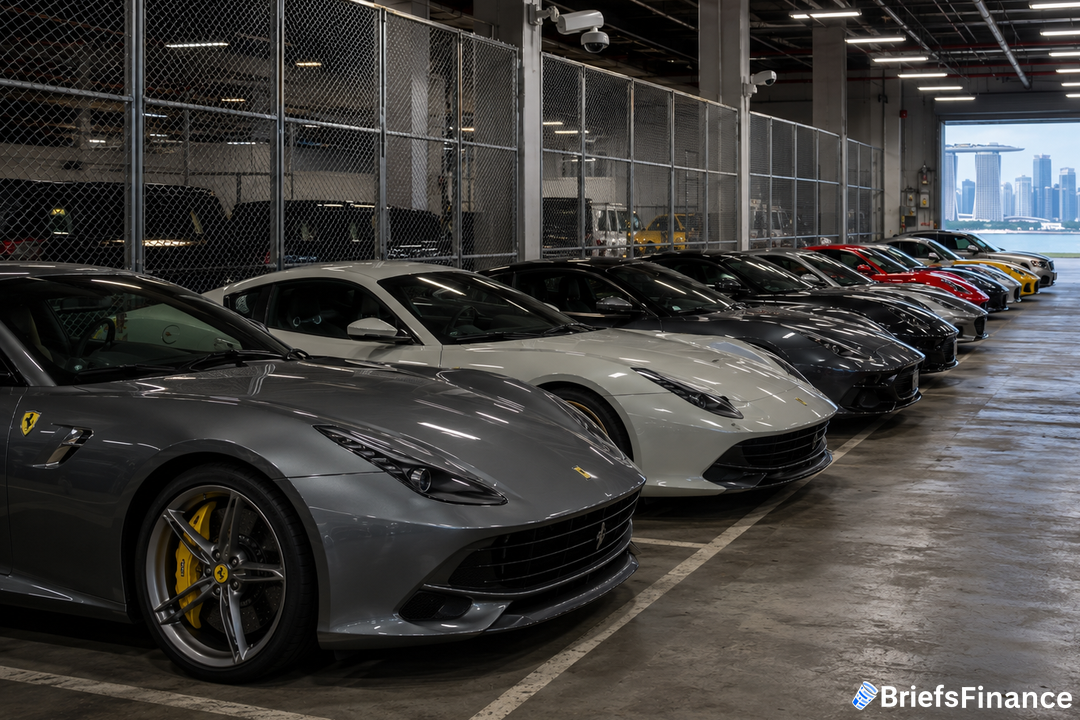
The 47 cars were registered between 2017 and 2023. They all came with valid Singapore certificates of entitlement, the government paperwork needed to own a vehicle there.
The lineup had a little of everything. Ferrari offered an SF90 Stradale and the F8 Spider, while McLaren put up a GT. Rolls-Royce and Bentley were in the mix too.
Toyota had multiple Alphards people-movers. At least 77 offers came in for a Toyota Alphard 2.5 SC CVT, while the F8 Spider drew no fewer than 40 bids.
Deloitte’s Singapore unit is handling the job of selling off the seized assets. It hired Sgcarmart Quotz, an online automotive marketplace, to run the sale. A Deloitte spokesperson said, “The local unit was selected to manage the liquidation of assets confiscated in the probe and brought in Sgcarmart Quotz for the sealed-bid process.”
Get the market news that matters in a five-minute read with Market Briefs, our free daily newsletter
The cars had sat in storage after being seized, and offers were accepted on Sgcarmart Quotz until noon local time. Images on the auction site showed dust on some vehicles and mold-like patches on others.
The Case Behind the Cars
This auction is one piece of a much larger takedown. Singapore’s investigation into money laundering began in 2023 and has reached S$3 billion, which is about $2.3 billion.
The full cache of confiscated goods is worth S$2.79 billion. That sum also covers real estate, handbags by Hermès, Richard Mille timepieces, and gold bars. The mixed inventory of the car auction – from Ferraris and McLarens to Toyota Alphards – shows how broadly the seized wealth was distributed across vehicle types.
The seized assets show how the proceeds were spread across both everyday and high-end purchases. The cars in the sale range from family-oriented Toyota Alphards to supercars, and they sit alongside properties, designer handbags, expensive watches, and gold bars in the confiscation list.
Several large international banks were also fined for lapses tied to the investigation. Ten people from Fujian, a province in southern China, received prison sentences between 13 and 17 months, while two ex-wealth bankers were also imprisoned for their roles.
The city-state has also taken steps to limit the damage from the affair. A separate review by a watchdog body found room for Singapore to strengthen its defenses against illicit money flows.
Why the Auction Matters
The affair has produced consequences beyond the auction. The case has led to prison terms for ten people from Fujian and two former bankers, as well as a watchdog critique of Singapore’s anti-money-laundering safeguards. The vehicle sale, meanwhile, is a visible result of the authorities’ effort to dispose of the S$2.79 billion cache and turn seized property back into cash. It also shows how far the city-state has gone to respond to one of its largest financial scandals.
Join Market Briefs, our free daily newsletter, for a quick daily rundown of the markets
