
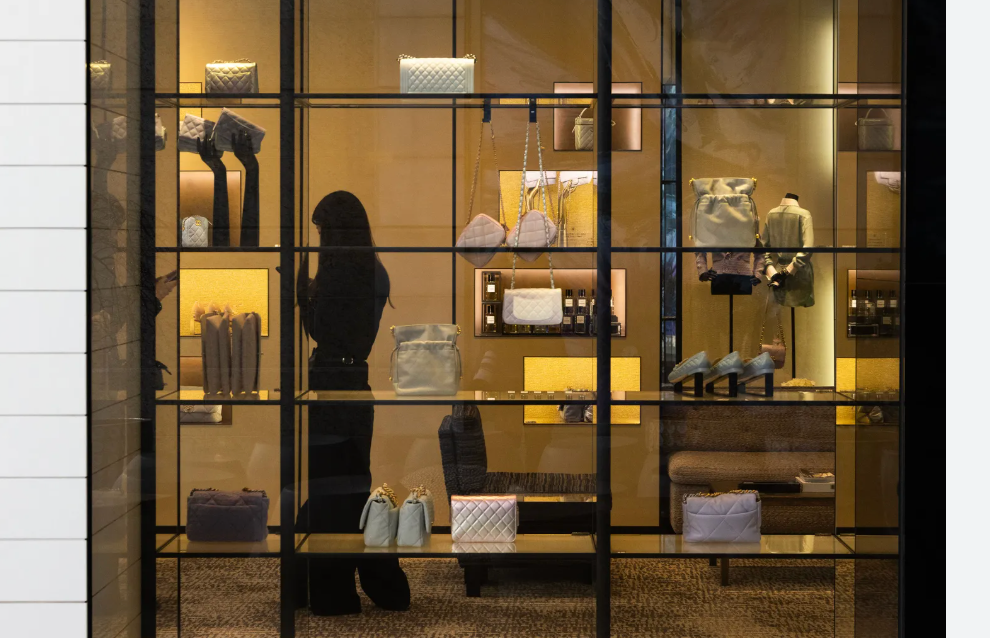
For better or for worse, luxury has become a huge part of popular culture and, consequently, of our daily lives. Carrie Bradshaw infamously spent extortionate amounts on coveted Manolo Blahniks. Gossip Girl’s Lily van der Woodsen inaugurated an era of ‘Birkin moms’. This fascination with luxury has slowly crept into reality. Influencers are flaunting their new, brand-name designer shoes and handbags. Actresses have started method dressing, using haute couture in order to promote their films. It is nearly impossible not to wonder, why?
Logically speaking, it makes little sense. There is absolutely no reason to spend so much money on luxury goods when so many cheaper options are available (even knockoffs for those hell-bent on getting a logo).
However, there is a psychological explanation. Buying luxury goods goes far beyond a desire for quality. In fact, it taps into some of the most subconscious, deep and dark parts of human psychology: the desire to be liked and somehow fit in. Studies have shown that luxury brands make people feel more attractive, both inside and out.
Psychologist, David Kruger, pointed out in Psychology Today that the bigger the size of a brand’s logo on an item, the more likely the person who is wearing it will be to attract a romantic partner. A point only further proven by the ‘match-up hypothesis’. According to this theory, the physical attractiveness of a celebrity who endorses a product might boost product evaluations if the characteristics of the celebrity endorser ‘match-up’ with the product.
As Micheal Kamins concluded, this means that associating a product with physical attractiveness can instantly make it more desirable. People tend to splurge on luxury goods, hoping that they will gain the approval of those around them. By buying something with an expensive price tag, they believe that they can automatically become part of an exclusive group. A phenomenon aptly dubbed ‘social signalling’: people are using visible markers in order to convey to other people the group to which they belong to.
Escapism is perhaps another factor to consider in this equation. Nowadays, people are tired of being overworked, underpaid, and constantly bombarded with relentless horrors from the news desk. ‘Treating’ themselves has become an effective, if temporary, solution to these problems. They believe that splurging on expensive items will make them feel, even momentarily, akin with the celebrities who tend to buy these products – offering a short-term escape from their troubles. This is a phenomenon known as hedonic consumption, where individuals seek to soothe themselves from life’s daily stressors by purchasing expensive goods.
The role of social media as a constant promoter of overconsumption is undoubtedly also unhelpful. Celebrities, such as the Kardashians, have built an empire based on flaunting luxury goods and celebrating their milestones with extravagant indulgences. Hashtags such as #TreatYourself have been trending, along with ideas for expensive skincare routines and even more extravagant girl dinners. This creates the notion that experiences oftentimes are more valuable than mere necessities. Indulgence is thus portrayed as an essential part of self-care, emphasising its relaxing effect and turning escapism into an aspirational norm.
According to studies conducted by Selin Atalay and Margaret Meloy in 2011, the consumption of luxury goods is closely related to emotional regulation. More specifically, consumers who are feeling sad might attempt to alleviate their sadness by purchasing luxury goods. In fact, further research has shown that they are willing to pay more money for these products if they believe that it will help them regulate their emotions. Whereas consumers in a positive emotional state might avoid such indulgences. Harri T. Luomala cited in his 2002 article “An empirical analysis of the practices and therapeutic power of mood-alleviative consumption in Finland” the reason for which being that extravagant purchases may create a sense of guilt afterwards, ruining contented states of mind.
However, that depends on the type of positive emotional state itself. For example, as Francine Petersen concluded in her 2013 study, ‘When Do Consumers Indulge in Luxury?’. It was found that people who experience positive emotions, such as happiness, related to certainty are more likely to spend money on luxury goods than consumers who experience positive emotions related to uncertainty, like hope.
Another psychological and financial phenomenon the luxury industry has cashed in on is scarcity. The more rare an item is, the more coveted it gets and the higher the price that people are willing to pay in order to acquire it. The sense of urgency created boosts the desirability of the item and, as such, its sales. A great example of that would be the Hermès Kelly and Birkin handbags. Elusive waiting lists ensure customers might have to wait months, or even years, to acquire a coveted bag. The brand has heavily monetised the concept of scarcity, ensuring that there will always be buyers for their extortionately expensive items. The fear of missing out on a rare product that is synonymous with affluence and possession of capital is enough to outweigh reasonable financial decisions, diminishing price sensitivity.
Ultimately, buying luxury goes deeper than seeking expert craftsmanship and excellent quality. It is an expression of the profound human need for social acceptance, the desire to fit in. Luxury is all about the stories we tell ourselves, and others, using luxury items as symbols of who we are and who we aspire to become.
Written by Mariza Michailidou
Edited by Daisy Packwood, Fashion Editor
