


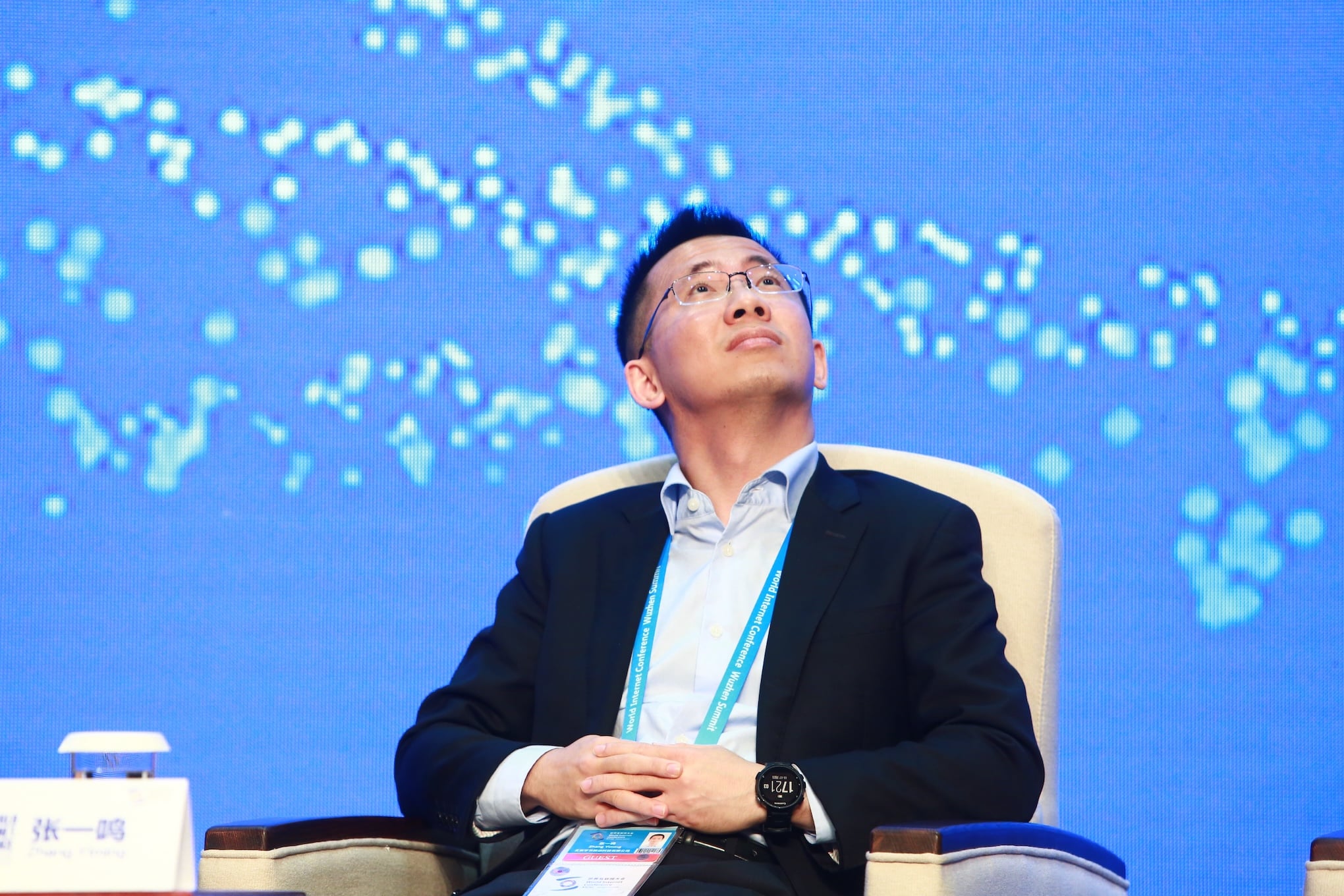
Seven years ago, ByteDance founder Zhang Yiming was worth $13 billion. Obviously, $13 billion is already an almost incomprehensible amount of money, but compared with where Zhang sits today, it looks downright quaint.
richest person in Asia for the first time, Zhang’s net worth has just crossed $105 billion. That’s an increase of roughly $92 billion since 2019. And with that surge, the 43-year-old TikTok founder has officially passed Indian industrialist Gautam Adani to become the richest person in Asia for the first time.
Not bad for a guy who stepped down as CEO of his company five years ago. So, how did Zhang’s fortune explode from $13 billion to $105 billion? The obvious answer is TikTok. But the more interesting answer is that TikTok is now just one part of a much larger money machine.
(Photo by VCG/VCG via Getty Images)
From $13 Billion To $105 Billion
When Bloomberg first began tracking Zhang’s fortune in March 2019, it estimated his net worth at $13 billion. At the time, ByteDance had already become one of the hottest private technology companies on earth. TikTok was exploding internationally, while its Chinese sister app Douyin had already amassed an enormous domestic audience.
But ByteDance was still worth a fraction of what investors believe it is worth today. Over the next seven years, Zhang’s fortune increased roughly eightfold, culminating in the surge that has now made him Asia’s richest person.
The latest move happened extremely quickly. Bloomberg estimates Zhang’s net worth jumped by more than $12 billion in September 2026 alone after it analyzed updated ByteDance valuations reported by major investment firms including BlackRock, Fidelity Investments, and T. Rowe Price.
Those updated valuations were enough to push Zhang past Adani. Adani’s fortune had risen as high as roughly $120 billion in June 2026, but declined in subsequent months as shares of companies in his business empire fell.
How Do You Value A Fortune Tied To A Private Company?
Unlike Elon Musk’s Tesla or Mark Zuckerberg’s Meta, ByteDance is not publicly traded. There isn’t a ByteDance stock price flashing across financial television every second, which makes calculating Zhang’s fortune considerably more complicated.
Zhang is believed to own roughly 20% of ByteDance. Therefore, the key question is simple: What is ByteDance worth?
In February 2026, a proposed sale of ByteDance shares by General Atlantic valued the company at approximately $550 billion. That represented a massive increase from an employee share buyback in 2025 that valued ByteDance at more than $330 billion. Other recent private-market estimates have climbed even higher.
If ByteDance is worth $600 billion and Zhang owns 20%, his stake would theoretically be worth $120 billion.
Bloomberg applies a 10% risk discount to ByteDance because the company is closely held and its shares can’t simply be sold on a public exchange. Apply that discount to a $120 billion stake and you get $108 billion, remarkably close to Bloomberg’s current estimate of Zhang’s fortune at a little over $105 billion.
Different investors can arrive at different numbers for ByteDance and Zhang. But the direction is unmistakable: private investors believe ByteDance has become dramatically more valuable.
The $500+ Billion Company Most Americans Think Is Just TikTok
Zhang co-founded ByteDance with his friend Liang Rubo in 2012. Its original breakthrough wasn’t TikTok. It was Toutiao, a Chinese news and content app built around an idea that now seems obvious but was much more novel at the time.
Instead of asking users what they wanted to see, ByteDance’s software watched what users actually did. What did they click? What did they ignore? How long did they look at something? The algorithm learned from those signals and continuously adjusted what it showed next.
That concept became the foundation of the ByteDance empire.
The company launched Douyin in China in 2016 and an international version called TikTok the following year. ByteDance then paid roughly $1 billion for Musical.ly, a lip-syncing app that already had a large teenage audience in the United States and other Western countries.
In 2018, Musical.ly was folded into TikTok. The rest is social-media history.
TikTok became one of the most downloaded and culturally influential apps in the world. It transformed the music business, helped create an entirely new generation of influencers, became an advertising powerhouse, and forced competitors including Instagram and YouTube to aggressively imitate its short-form video format.
But ByteDance never stopped being an algorithm and artificial-intelligence company. And that’s increasingly important to Zhang’s fortune.
Plot Twist: This Is Becoming An AI Fortune
It’s perfectly reasonable to describe Zhang Yiming as the TikTok billionaire. But increasingly, his $105 billion fortune is also an artificial-intelligence fortune.
Long before ChatGPT turned AI into the dominant technology story of the decade, ByteDance was using machine learning at extraordinary scale to predict exactly what hundreds of millions of people wanted to watch next. Recommendation technology was the core of the company.
Now ByteDance is pouring enormous resources into generative AI. Its Doubao chatbot has become one of China’s most popular consumer AI products, while its Seedance technology competes in the rapidly developing AI video-generation market.
That helps explain why ByteDance’s valuation has continued climbing even after TikTok reached a level of maturity that would normally make investors wonder where the next giant wave of growth would come from. Increasingly, investors see AI as that next wave.
For Zhang, who still owns roughly one-fifth of the company, every increase in ByteDance’s private valuation has an enormous impact on his personal fortune.
The TikTok Crisis That Almost Changed Everything
What’s especially remarkable about Zhang’s ascent is that just a few years ago, TikTok’s future in the United States looked extremely uncertain.
In 2024, Congress passed legislation requiring ByteDance to divest TikTok’s American operations or face restrictions that could effectively remove the app from the U.S. market. The Supreme Court allowed the law to take effect in January 2025, and TikTok actually became temporarily unavailable to American users.
For ByteDance investors, that was a serious risk. One of the company’s most important global products was staring at the possibility of being kicked out of the United States.
But the nightmare scenario never fully materialized.
In January 2026, ByteDance completed a restructuring that created TikTok USDS Joint Venture LLC. American and international investors collectively received an 80.1% interest in the venture, while ByteDance retained 19.9%. The new structure placed responsibility for areas including American user data, cybersecurity, and the U.S. recommendation system under the venture.
TikTok kept operating in the United States, removing one of the biggest clouds hanging over ByteDance’s valuation.
ByteDance Is Making An Enormous Amount Of Money
There’s another reason investors are willing to assign such enormous valuations to ByteDance. This isn’t a speculative AI startup burning billions of dollars while hoping to someday discover a viable business model.
ByteDance already generates enormous revenue and profit. Its businesses span advertising, social media, e-commerce, gaming, enterprise software, and artificial intelligence, with TikTok and Douyin sitting at the center of two massive consumer ecosystems.
That makes Zhang’s wealth structurally different from the fortunes of founders whose companies remain years away from profitability. ByteDance has already proven it can generate huge amounts of cash while continuing to invest heavily in new products.
And remember the central piece of math: Zhang owns roughly one-fifth of it. If investors decide ByteDance is worth another $50 billion, the theoretical gross value of his 20% stake increases by roughly $10 billion.
That’s how fortunes on this scale can move so quickly.
He Hasn’t Been CEO Since 2021
Perhaps the strangest part of Zhang’s story is that he accumulated tens of billions of dollars in additional wealth after largely removing himself from the public-facing management of the company.
Zhang stepped down as ByteDance CEO in 2021. Later that year, he also relinquished his chairmanship and turned day-to-day management over to co-founder Liang Rubo. Zhang was still only in his late 30s.
At the time, he told employees he wasn’t particularly interested in traditional management and preferred thinking about long-term strategy, organizational culture, and technology.
Financially, it worked out pretty well. Zhang stopped being CEO. He kept his ownership. ByteDance kept growing. And his stake became dramatically more valuable.
A New Kind Of Asian Fortune
Zhang overtaking Gautam Adani is interesting for another reason. For decades, many of Asia’s largest fortunes were built in traditional empire-building industries: energy, ports, real estate, telecommunications, manufacturing, commodities, and retail.
Adani built a sprawling infrastructure empire encompassing ports, power generation, airports, mining, renewable energy, cement, and logistics. Zhang built his fortune from software that figured out which video you would watch next.
That puts him closer to the founders who reshaped the American billionaire rankings. Jeff Bezos became one of the richest people in history through Amazon. Zuckerberg created his fortune through Facebook. Musk built his through technology, electric vehicles, rockets, satellites, and artificial intelligence.
Zhang’s rise is another illustration of where the next generation of gigantic fortunes may come from. The biggest fortunes of the industrial era were built on oil, railroads, steel, factories, and real estate. Increasingly, the fortunes of the current era are being built on software, algorithms, computing infrastructure, and AI.
From $13 Billion To The Richest Person In Asia
In March 2019, Zhang Yiming was worth an estimated $13 billion. Today, his fortune stands at more than $105 billion, an increase of approximately $92 billion in just seven years.
Along the way, Zhang lived through a Chinese technology crackdown, watched the United States come extraordinarily close to shutting down his company’s most famous international product, stepped down as CEO, and largely disappeared from public view. Yet through all of that turbulence, ByteDance kept growing.
Now the company has moved far beyond its original reputation as simply the owner of TikTok. It’s investing aggressively in artificial intelligence, operating some of the largest consumer platforms in the world, and attracting private-market valuations north of half a trillion dollars.
If ByteDance’s AI bets work and its valuation keeps climbing, $105 billion may eventually look like another quaint milestone in Zhang Yiming’s wealth story.
For the moment, though, $105 billion is enough to give him a distinction he has never held before: Zhang Yiming is the richest person in Asia.
