


Along the southern edge of Athens, where the city begins to loosen its grip and the Aegean comes into view, an ambitious new district is taking shape. The Ellinikon is transforming the grounds of the former Athens International Airport into a vast coastal destination—part residential enclave, part metropolitan park, and part vision of how Mediterranean cities might evolve in the decades ahead.
For international buyers, the proposition is compelling. It offers access to Athens without requiring a life governed by its density. The Acropolis, galleries, restaurants, and cultural institutions remain within reach, while the beaches, marinas, and leisurely cadence of the Athenian Riviera define everyday life closer to home.
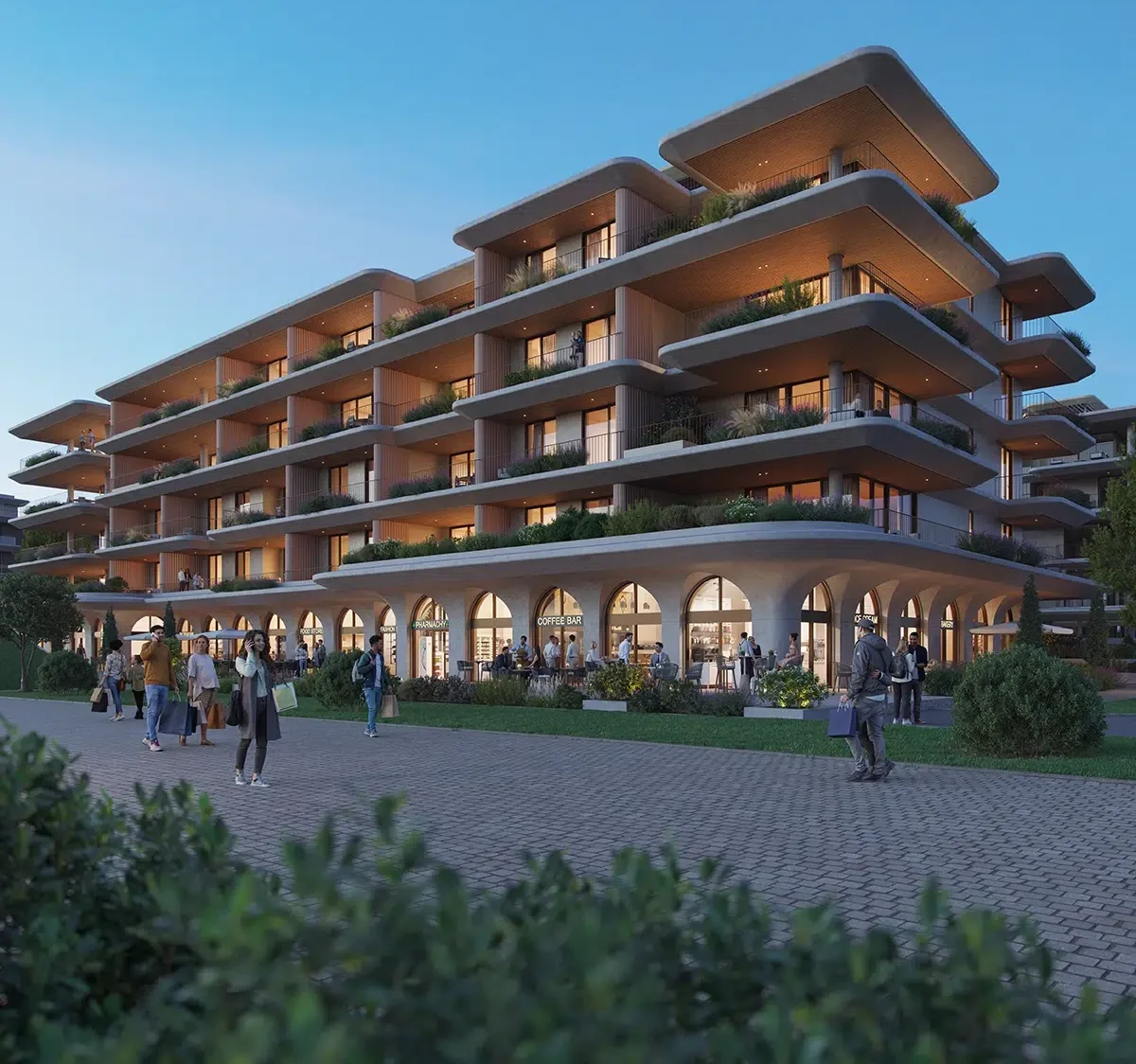
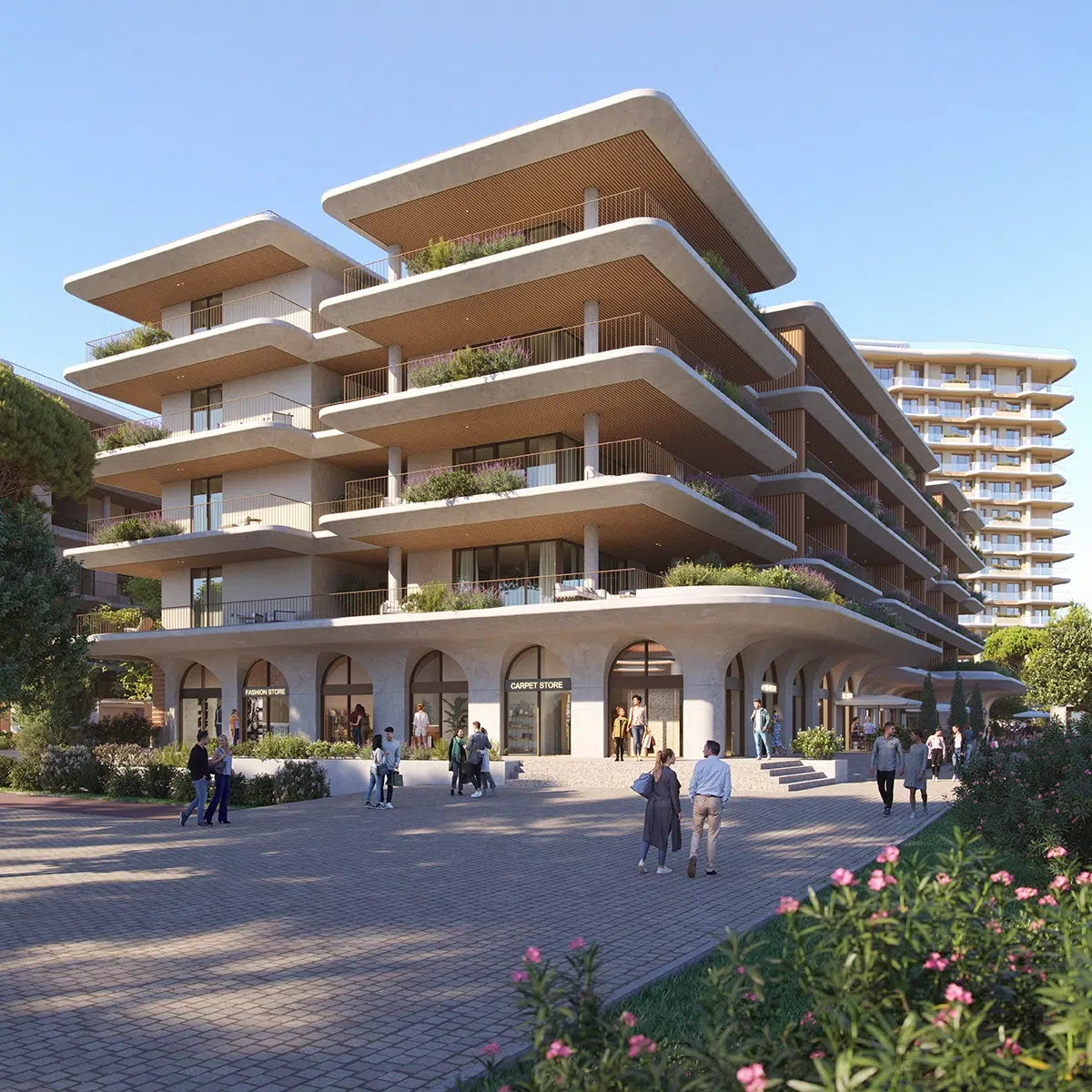
The latest residential release within the master plan, The Courtyards, brings that promise into sharper focus. Designed by Greek architecture practice AUDO, the development comprises 324 residences arranged across 11 buildings in Little Athens, a walkable neighborhood envisioned as one of The Ellinikon’s most sociable residential quarters. Private gardens, landscaped courtyards, restaurants, cafés, and boutiques are integrated into the plan, creating the feeling of a self-contained Mediterranean neighborhood rather than a conventional apartment complex.
The result is less about escaping the city than discovering a more agreeable version of it.
For generations, visitors approached Athens primarily through its antiquities. The city’s identity was inseparable from the Parthenon, the Agora, and the monumental legacy of classical Greece. Yet beyond the center, the coastline stretching south toward Cape Sounion has long offered another expression of Athenian life—one shaped by beach clubs, waterfront restaurants, sailing, and late dinners beside the sea.
Now, the Riviera is becoming increasingly important to the capital’s modern identity.
 Interest from overseas purchasers appears to be rising accordingly. A newly launched Greek property investment index reported that American buyers researching Greek real estate carried an average budget of approximately €1 million, with growing attention directed toward new development on the Athens Riviera and other mainland coastal markets.
The attraction is not difficult to understand. Athens offers a major European capital, a favorable climate, direct international air connections, and an enviable coastal lifestyle, while prime residential pricing may still compare favorably with established enclaves in Paris, London, or the French Riviera.
At The Ellinikon, that appeal is being distilled into something more comprehensive: an entirely new urban district built around access to nature, leisure, culture, and the sea.
The Courtyards takes its name from the landscaped spaces positioned at the center of its residential clusters. Rather than treating greenery as decoration around the perimeter, AUDO has made it an organizing principle.
Pathways, seating areas, recreational spaces, and planting create a softer environment between the buildings, encouraging residents to spend time outdoors and giving the development a sense of intimacy despite its scale. Ground-floor restaurants and retail introduce everyday activity, while the residences above remain oriented toward privacy, light, and views.
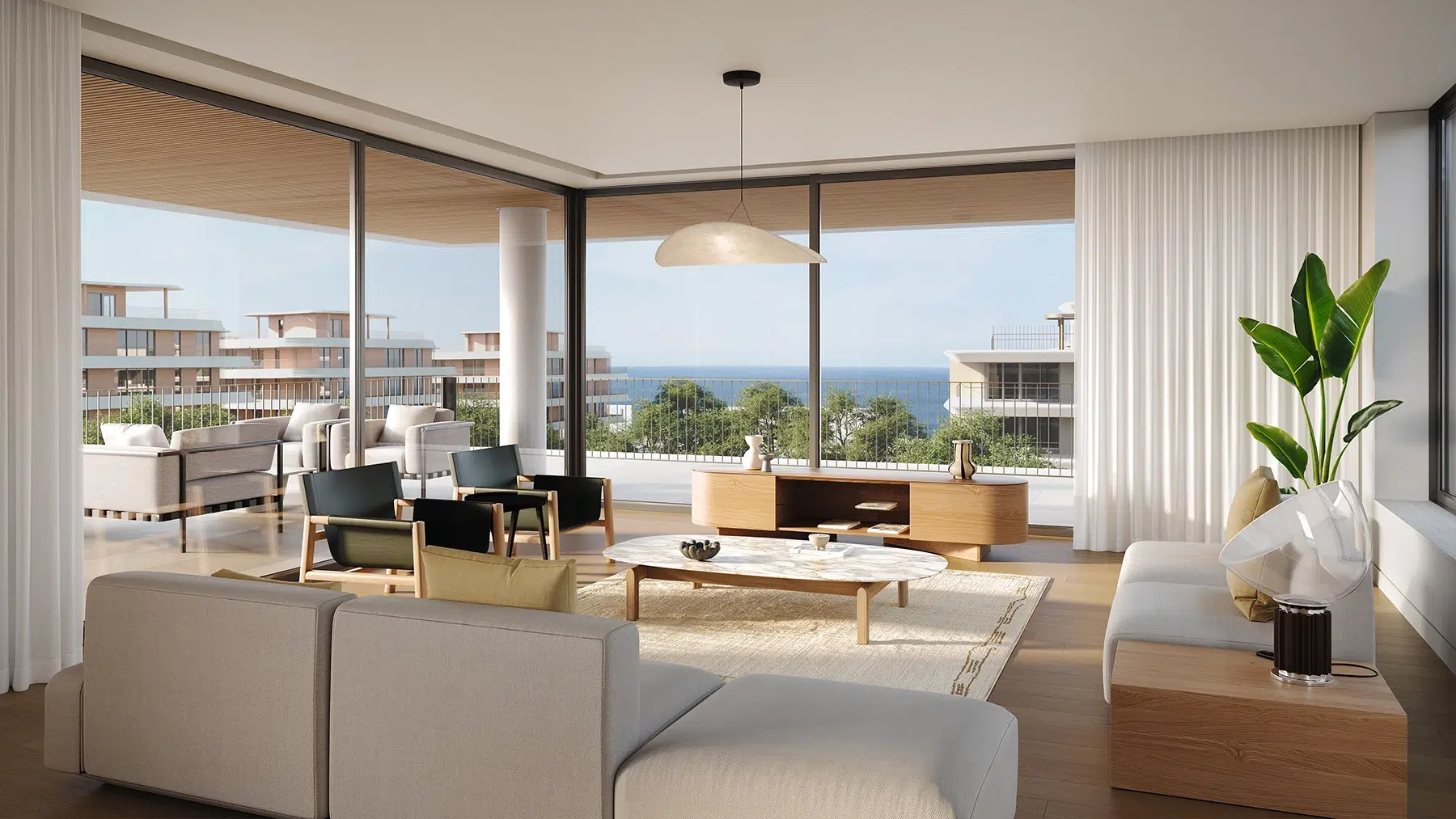
The buildings sit approximately 350 meters from the sea, with outlooks extending toward the Aegean, the Ellinikon Park, and the surrounding mountains. Apartments range from one to four bedrooms, while select ground-floor homes include private gardens with a pool or Jacuzzi. Certain top-floor residences are crowned with private roof gardens, giving owners their own elevated retreat above the neighborhood.
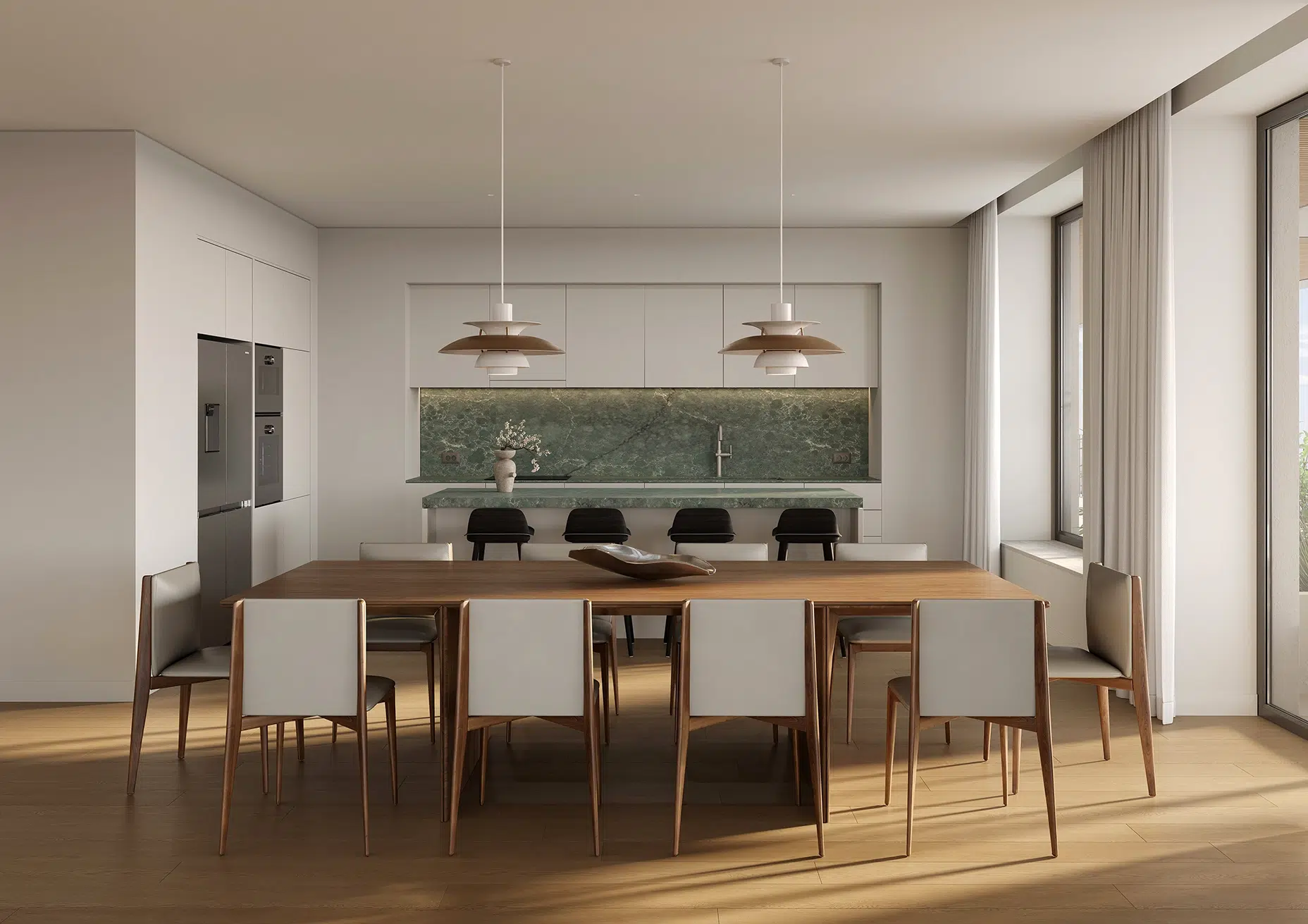
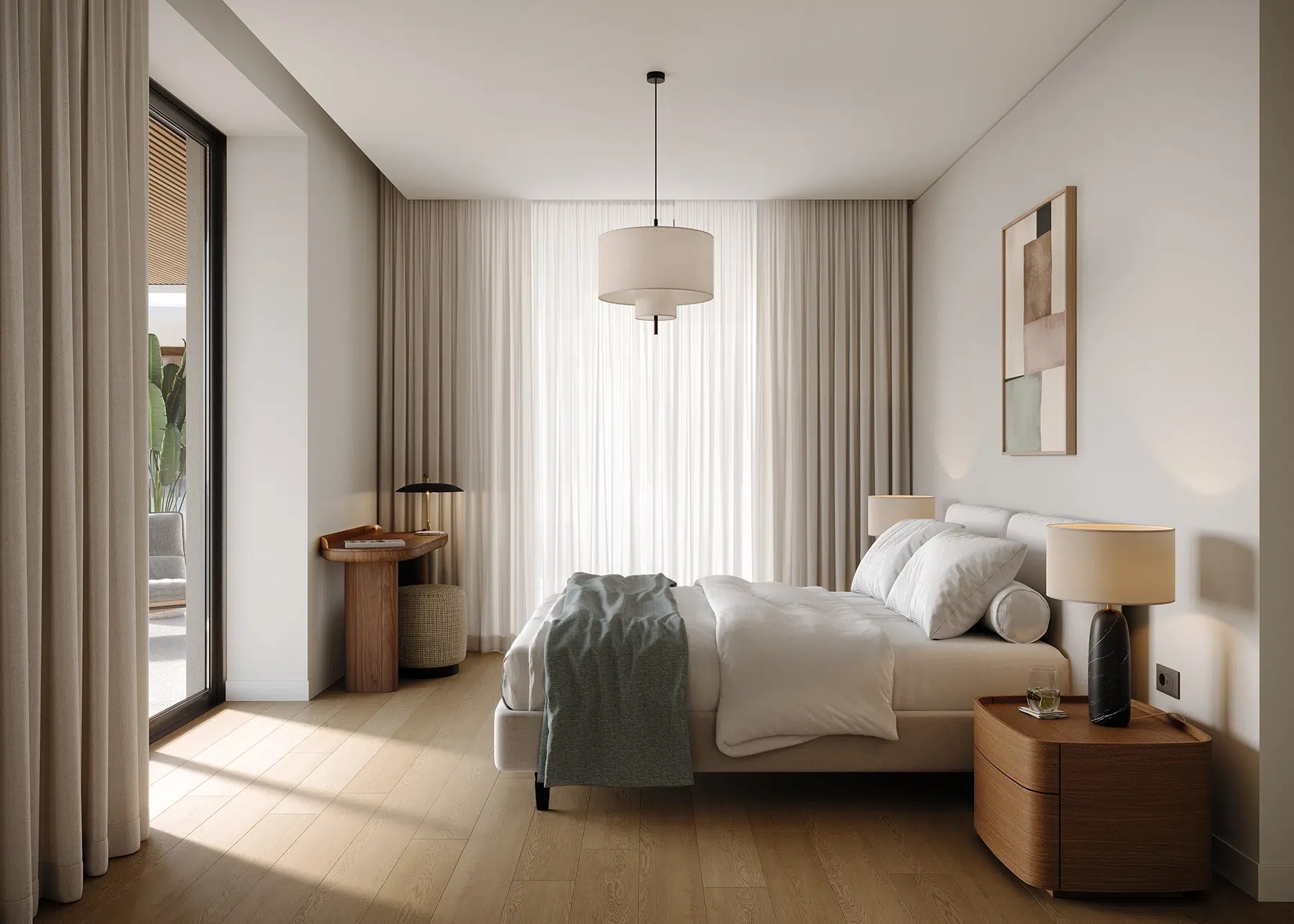
Inside, the architecture favors restraint. Full-height sliding doors draw daylight deep into the residences and extend living rooms onto generous balconies. Natural wood, minimal cabinetry, and a muted palette create a calm backdrop for contemporary life rather than compete with the sea and landscape outside.
According to materials supplied for the launch, pricing begins at approximately €500,000 and rises beyond €4 million, depending on size, position, and amenities. At the upper end, the appeal lies not simply in square footage but in privileged outdoor space: roof terraces, private gardens, pools, and the increasingly rare luxury of moving between city and coast without compromise.
The Courtyards represents only one component of a master plan of remarkable scale.
The Ellinikon covers 6.2 million square meters and is being developed on the former airport site as a mixed-use coastal district with residences, hospitality, retail, offices, cultural venues, parkland, and public waterfront. Plans call for more than 8,000 residences, hotels and resorts, a vast metropolitan park, and a newly landscaped public beach.
The development also anticipates an extensive network of pedestrian and cycling routes, a significant proposition in a metropolitan region historically dominated by automobiles. Its economic ambitions are equally considerable, with the project expected to generate tens of thousands of jobs and attract approximately one million additional visitors to Athens each year once fully realized.
Such numbers inevitably invite scrutiny. Projects of this magnitude are measured not only by architectural renderings but by execution—how infrastructure functions, how public and private space coexist, and whether sustainability ambitions survive the realities of construction and long-term operation.
Still, The Ellinikon’s importance is difficult to overstate. It is not a resort placed beside an existing city, nor merely a collection of towers and luxury apartments. It is an attempt to redraw a substantial piece of Athens around a contemporary ideal of coastal urbanism.
For an American purchaser, The Courtyards offers several possible narratives. It may serve as a primary residence for someone relocating to Europe, a seasonal base between Athens and the islands, or a long-term investment within an emerging luxury district.
Foreign nationals may purchase within the development, and properties meeting the applicable investment threshold may potentially qualify buyers to apply for Greece’s Golden Visa under current legislation. Individual legal, tax, and residency advice would, of course, be essential before any acquisition.
The lifestyle case may ultimately prove more persuasive than the investment argument. A resident could begin the morning walking through landscaped gardens, spend the afternoon beside the Aegean, and dine in central Athens that evening. The airport remains accessible, the islands are within reach, and the culture of one of the world’s oldest capitals lies just beyond the Riviera.
That combination history without stasis, urban energy without constant intensity is what distinguishes the proposition.
The world has no shortage of expensive coastal addresses. What it has far fewer of are opportunities to witness an entire destination being created at once.
The Courtyards arrives at a pivotal moment for The Ellinikon, as portions of the master plan move from promise toward physical form and earlier residential releases demonstrate the depth of demand. Its architecture is quiet rather than theatrical, drawing its character from courtyards, natural light, landscaped pathways, and proximity to the water.
In another setting, these might seem like familiar luxuries. On the former runway of an international airport, they carry a more symbolic weight.
Athens, a city forever associated with its past, is turning decisively toward the sea and The Ellinikon may become its most consequential new address.
