


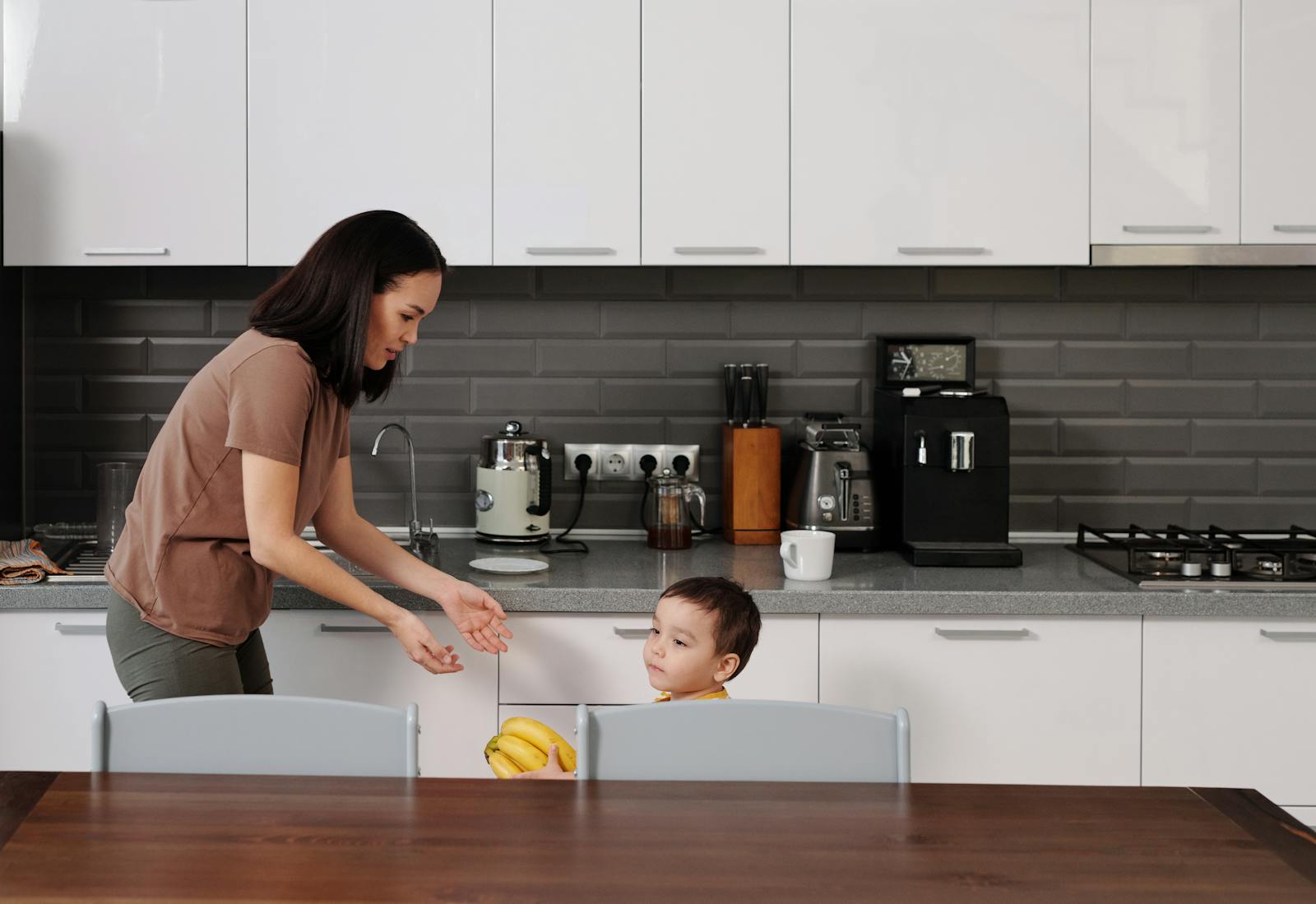
The child accepted the apology without hesitation. That’s the detail that stopped my friend cold.
She’d been telling me about a fight with her kid. She’d snapped at him over spilled juice, he’d cried, she’d walked into the kitchen, paused, walked back, and said the thing her own mother never said to her: A parent might apologize by acknowledging their frustration and admitting they took it out on their child unfairly.
And her son just… took it in. No flinching. No freezing. No scanning her face to see if it was a trap. He accepted the repair like it was normal, because for him, it was.
She realized she was watching her son do something she didn’t learn until she was 34 and in therapy: accept an apology without bracing for impact.
That’s the inheritance. Not the college fund. Not the beach house. The ability to repair.
The thing money can’t buy and trauma can’t fake
There’s a specific kind of adult you meet sometimes who seems weirdly okay. Not perfect. Not polished. Just… regulated. They can hear criticism without collapsing. They can be wrong without spiraling. They can apologize without performing.
And if you ask them about their parents, there’s usually some version of the same story. My mom came back after she yelled. My dad admitted when he didn’t know. They were flawed, but they were accountable.
That’s not a personality. That’s a blueprint.
Psychologists have been quietly saying this for decades. The parent-child bond isn’t built on getting it right every time. It’s built on what happens after you get it wrong. Research in attachment theory describes parental sensitivity as a two-part skill: noticing when a child needs comfort, and responding in a way that actually lands. Parents who dismiss children’s emotions with phrases like toughen up reinforce anxious insecurity. The parent who stays close, who adjusts, who repairs reinforces safety.
The myth that apology equals weakness
Here’s the conventional wisdom I grew up with, and maybe you did too: if you apologize to a kid, you lose your authority. They’ll walk all over you. They’ll stop respecting you. They’ll exploit the crack.
It’s wrong. And not in a squishy, feel-good way. Wrong in a measurable, longitudinal, this-is-what-the-data-shows way.
A renewed interest in parenting styles has pushed the old distinction back into the conversation: authoritarian parents demand obedience through fear and punishment. Authoritative parents set clear expectations but stay warm, responsive, and willing to explain themselves. Research suggests the kids raised by the second group don’t become pushovers. They become adults with self-esteem, autonomy, and here’s the part that breaks the myth: more genuine respect for legitimate authority, not less.
Turns out when you apologize to a child, you’re not handing over the keys. You’re teaching them what accountability looks like when it’s safe.
What actually gets passed down
Kids don’t just inherit eye color and earning potential. They inherit conflict styles. They inherit whether repair feels possible or dangerous.
A study out of Auburn University found that marital conflict damages kids far less when parents (particularly fathers) demonstrate constructive resolution. The fights don’t have to disappear. The kids have to see them end in something other than withdrawal, silence, or a lingering sense that someone is still losing.
That’s the model children carry into adulthood. Not that conflict is bad. That conflict is survivable and can be resolved.
The household you grow up in is the dominant variable. Not the specific genes you inherit. The culture of the home. The temperature of the kitchen at 6pm. Whether voices get loud or stay steady. Whether mistakes get named or buried. The quality of emotional regulation in a household isn’t just affecting the kids who live there. It’s the mechanism by which everything else gets transmitted.
Why most adults can’t apologize to children
It’s worth being honest about why this is so rare. For a lot of people, apologizing to a child feels cosmically wrong, like a violation of the order of things. And usually it’s not because they’re cruel. It’s because they were raised in a system where admitting fault meant losing the only power you had.
I’ve been reading a lot of behavioral science research lately about why older generations struggle to apologize, and the patterns are staggering. People sharing stories about parents who would rather let a grudge ossify for 30 years than admit they were wrong. It’s not a character flaw. It’s a survival strategy that outlived its usefulness.
If you grew up in a house where vulnerability got weaponized, saying sorry feels like handing someone live ammunition. You don’t do that to your kids. You just… don’t. Not because you don’t love them. Because you never saw it done safely.
What the apology actually teaches
When a parent apologizes to a child without collapsing, three things happen at once.
First, the child learns that love and fallibility coexist. You can mess up and still be trusted. That’s the foundation of every healthy adult relationship: the belief that conflict doesn’t equal abandonment.
Second, the child learns the actual mechanics of repair. What words go in what order. What tone sounds sincere versus performative. How to accept an apology without bargaining. These are skills, not instincts. Most adults don’t have them because nobody modeled them.
Third — and this is the part that always gets me — the child learns that authority isn’t fragile. If a parent can admit when they were wrong and still maintain authority, authority gets reframed as something that comes from character, not from being infallible. That kid grows up and doesn’t need to be right to feel secure.
Rupture and repair is the whole game
Every relationship (parent-child, romantic, friendship) runs on a ratio. How often do you fall out of sync, and how often do you find your way back?
The secure kids aren’t the ones whose parents never ruptured. Those kids don’t exist. The secure kids are the ones whose parents ruptured and came back. Over and over. Predictably enough that coming back started to feel like the default.
It’s the same architecture in every relationship that works. The adults who go first, who break the silence, who name the thing, who apologize without hedging, are the ones who build trust that lasts. Not because going first is easy. Because going first, over and over, is what teaches the people around you that repair is always available.
I keep thinking about my friend’s son. The way he didn’t flinch. The way he just took the apology in, the way a kid accepts a glass of water when he’s thirsty. No negotiation. No suspicion. No sense that something was being handed over that might be taken back.
That’s what generational wealth actually looks like when you strip away the paperwork. A child, somewhere, accepting a repair without bracing. Not knowing he’s inheriting anything at all.

If You Were a Healing Herb, Which Would You Be?
Each herb holds a unique kind of magic — soothing, awakening, grounding, or clarifying.
This 9-question quiz reveals the healing plant that mirrors your energy right now and what it says about your natural rhythm.
✨ Instant results. Deeply insightful.
