

Where opulence once announced itself through excess – gilded surfaces, dramatic chandeliers and oversized statements – contemporary luxury increasingly reveals itself through atmosphere, restraint and experience. And nowhere is this transformation more visible than within the modern bathroom.
No longer treated as a purely functional room, the bathroom has evolved into one of the most emotionally important spaces within the home. It is where mornings begin slowly, where evenings decompress gently, and where the rituals of wellness unfold in private.
Within this new language of luxury living, the LED bathroom mirror has emerged as an unexpectedly defining detail – not because it demands attention, but because it transforms how a space feels.
The bathroom as a wellness sanctuary
Over the past decade, wellness has shifted from occasional indulgence to daily lifestyle philosophy. Luxury consumers increasingly prioritise environments that support calm, restoration and sensory balance. Spas, boutique hotels and wellness retreats have influenced residential expectations profoundly, encouraging homeowners to recreate similar experiences within their own interiors. Bathrooms sit at the centre of this movement.
Freestanding baths, natural stone textures, brushed brass fittings and layered lighting schemes are no longer reserved for hospitality spaces. They are now integrated into contemporary private residences across London, Manchester and the wider UK luxury property market.
Yet among these elements, lighting remains the most psychologically influential. And the LED bathroom mirror has become one of the most elegant ways to shape it.
Light as emotional architecture
Luxury interiors are increasingly designed around emotion rather than decoration. Architects and designers understand that lighting affects not only visibility, but also perception, mood and physical comfort. Harsh overhead illumination creates tension whereas balanced ambient light softens spatial experience and encourages relaxation. An LED bathroom mirror introduces this softer lighting philosophy directly into the user’s daily routine.
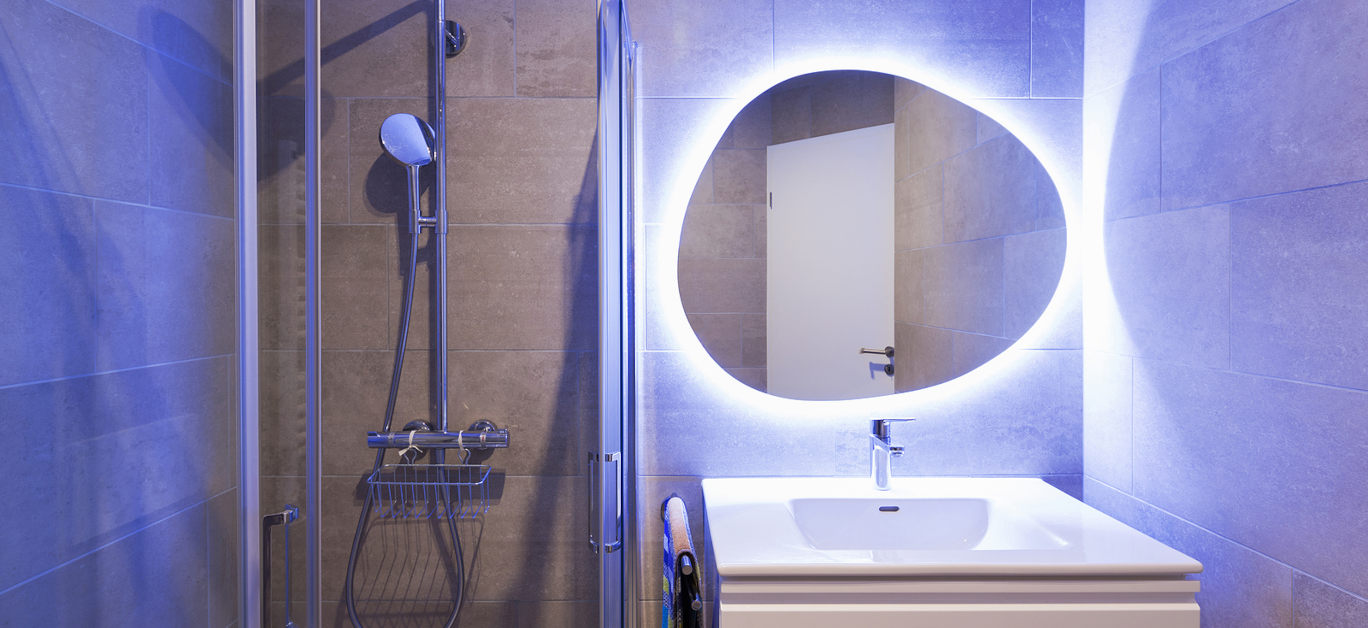
Unlike traditional bathroom lighting, which often casts downward shadows and uneven brightness, integrated LED illumination distributes light evenly across the face and surrounding surfaces. The effect is subtle but transformative: skin appears softer, reflection feels calmer, the room gains depth and atmosphere. More importantly, the space begins to feel intentional.
The influence of boutique hospitality
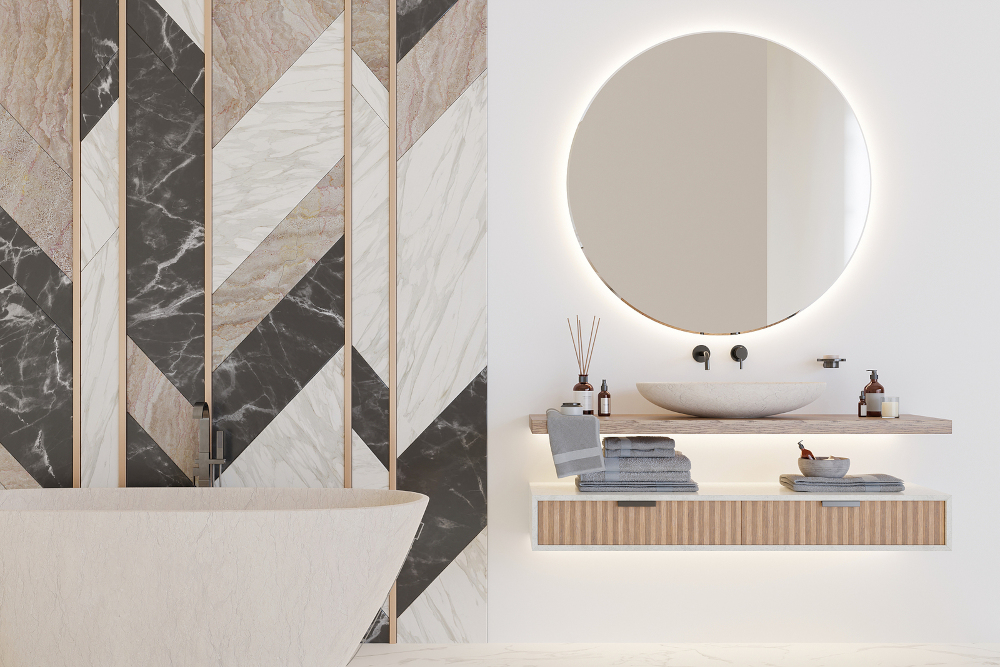
Luxury hospitality has played a defining role in shaping modern bathroom expectations. Five-star hotels have long understood that bathrooms contribute significantly to perceived comfort and emotional luxury. Softly illuminated mirrors, anti-fog functionality and carefully controlled lighting temperatures create environments that feel immersive rather than merely practical. Today’s homeowners increasingly seek the same experience.
The rise of the LED bathroom mirror reflects this transition from hotel-inspired aspiration to residential reality. The mirror becomes more than a utility, it becomes part of the sensory choreography of the room.
Morning routines feel calmer. Evening skincare rituals feel more indulgent. Even simple daily moments become elevated through environment. This is modern luxury at its most effective – experiential rather than performative.
Quiet luxury and the minimalist aesthetic
The contemporary luxury movement often described as ‘quiet luxury’ prioritises refinement over spectacle. Materials are tactile rather than ostentatious, technology is integrated rather than exposed, and spaces feel curated, balanced and emotionally composed.
The LED bathroom mirror aligns naturally with this philosophy. Its appeal lies partly in what it removes: visible bulb clutter, bulky fixtures, harsh shadows, and visual noise. Instead, illumination is embedded seamlessly into the architecture of the mirror itself.
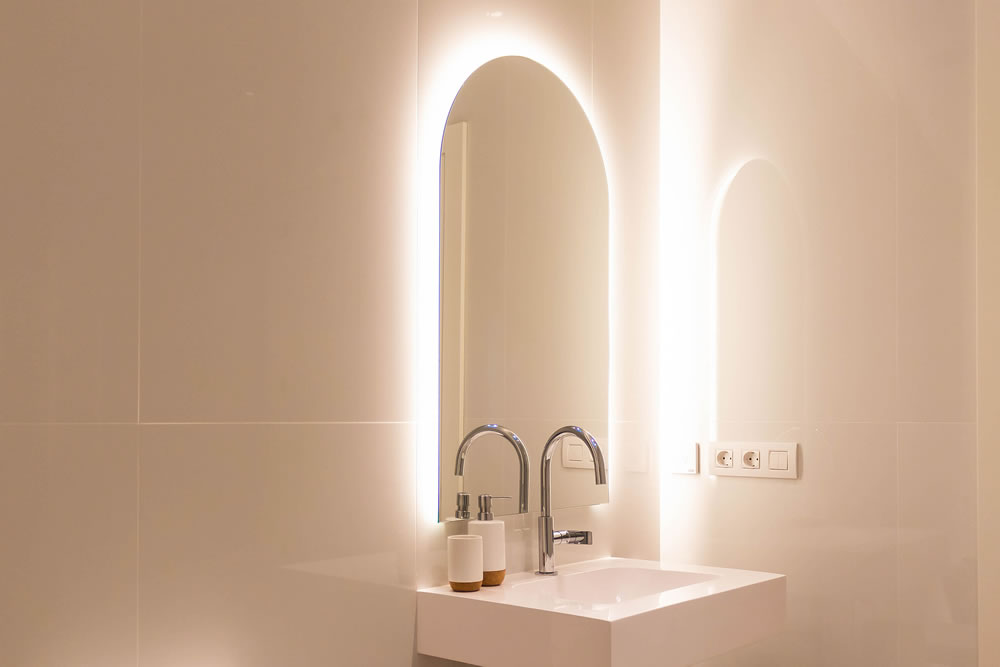
This integration creates visual clarity – one of the defining characteristics of sophisticated contemporary interiors. In many luxury bathrooms, the mirror becomes the focal point precisely because it appears so restrained.
Wellness technology without intrusion
One of the most significant trends in luxury living is invisible technology. Consumers increasingly prefer homes where innovation enhances experience quietly rather than dominating attention. Smart-home systems, climate controls and integrated lighting are expected to operate intuitively in the background.
Modern LED bathroom mirrors embody this shift. Features such as: touch-sensitive controls, anti-fog systems, dimmable lighting, and adjustable colour temperatures integrate functionality without compromising visual calm. The result is a more seamless interaction between technology and ritual, leaving the room to feel intelligent without feeling mechanical.
The psychology of reflection
Mirrors occupy a unique emotional role within interiors – they shape self-perception, influence light behaviour and alter spatial psychology. In luxury bathrooms, mirrors increasingly function as experiential surfaces rather than passive objects.
The addition of integrated LED lighting changes the emotional quality of reflection itself – balanced illumination reduces facial shadowing and creates softer visual transitions. This subtle improvement affects how people perceive both themselves and the room around them.

Within wellness-oriented design, these micro-experiences matter. Luxury is often defined less by scale than by how a space makes someone feel repeatedly over time.
Residential spas and the future of luxury living
As home wellness continues to evolve, the line between residential bathrooms and private spas grows increasingly blurred. Steam showers, heated flooring, aromatherapy systems and layered lighting are becoming more common in premium residential developments throughout the UK.
The LED bathroom mirror sits comfortably within this ecosystem because it supports both atmosphere and function simultaneously. Retailers such as LED Mirror World UK increasingly operate within this wellness-driven luxury market, where consumers seek products that contribute to holistic spatial experience rather than isolated decoration.
The modern luxury bathroom is no longer designed solely for efficiency, it is designed for emotional transition – from stress into calm, from activity into stillness.

Sustainability and long-term luxury
Modern luxury also carries an increasing awareness of sustainability and longevity. LED lighting technology offers lower energy consumption and extended operational lifespan compared to traditional alternatives. This aligns with the broader shift toward responsible luxury – products chosen not only for aesthetics, but for efficiency and durability.
Today’s affluent homeowner increasingly values intelligent restraint over disposable excess. A thoughtfully integrated LED bathroom mirror therefore becomes both a design decision and a lifestyle philosophy.
The new definition of status
Luxury status symbols have changed – the contemporary affluent homeowner is less interested in visible extravagance and more interested in environments that communicate balance, wellness and considered living.
A softly illuminated bathroom mirror may appear understated compared to historical notions of luxury, yet that subtlety is precisely what defines modern sophistication. It reflects an understanding that comfort, atmosphere and emotional wellbeing now hold greater value than overt display.
The LED bathroom mirror has become a modern status detail not because it dominates the room, but because it quietly transforms the experience of being within it. And increasingly, that transformation is what luxury living is truly about.
